Needle Lace or Bobbin Lace? How to Tell Them Apart
What is the difference between needle lace and bobbin lace? One is stitched with a single thread and a needle, the other plaited from many threads on a pillow. A guide to the clues in the cloth, with museum examples.
Needle lace is stitched with one thread and a needle; bobbin lace is plaited from many threads wound on bobbins and held in place with pins on a pillow. Needle lace is built from looped, buttonhole-type stitches; bobbin lace is made by crossing and twisting pairs of threads, so its solid areas read like tiny woven cloth.
From 14 November 2026 to 11 April 2027, The Bowes Museum in County Durham shows Lace and Legacy: Fashion Treasures from the Blackborne Collection. Its own page describes a charting of European lace from the sixteenth to the twentieth century, and notes that the collection builds on lace that Joséphine Bowes acquired in the nineteenth century. Whatever hangs in a gallery like that, the first question a piece of lace asks is how it was made. The answer almost always starts with one of two families, and once you know the difference you can sort most antique lace on sight.
How is needle lace made?
Needle lace is made with a single thread and one needle, worked as looped stitches, chiefly buttonhole stitch, over a pricked pattern. The lacemaker builds each motif in small sections, outlines it with a thickened rim, and fills it with stitches. Nothing is woven: every part of the lace is an embroidery stitch that has lost its fabric.
The Textile Research Centre in Leiden puts the split in one sentence: needle lace is made with a single thread and one needle, while bobbin lace is made by manipulating multiple threads wound on bobbins. Margaret Jourdain's 1908 handbook calls buttonhole stitch "the chief stitch in needle-made lace".
The best description of the work comes from a manual. The Dictionary of Needlework (Caulfeild and Saward, 1882) explains that point lace, its term for needle-made lace apart from cutwork and drawn work, is worked in small sections on parchment patterns. You prick the outline of each section and tack a coarse thread around it, through the parchment. You then make rows of buttonhole stitch over a laid thread to fill each leaf, and finish the motif by working buttonhole stitch over a coarse thread to form a firm edge, the cordonnet, which can be decorated with picots. The tacking holds the work in place and is cut stitch by stitch from behind when the lace is done, releasing it without pulling it out of shape.
That manual is a Victorian recipe for making lace as a pastime, not a description of every workshop, but its logic holds across the family. Related techniques make the same point from the other direction. Reticella builds needle stitches on a grid of drawn linen threads, and punto in aria removes the linen altogether and builds the lace "in the air" on outline threads.
How is bobbin lace made?
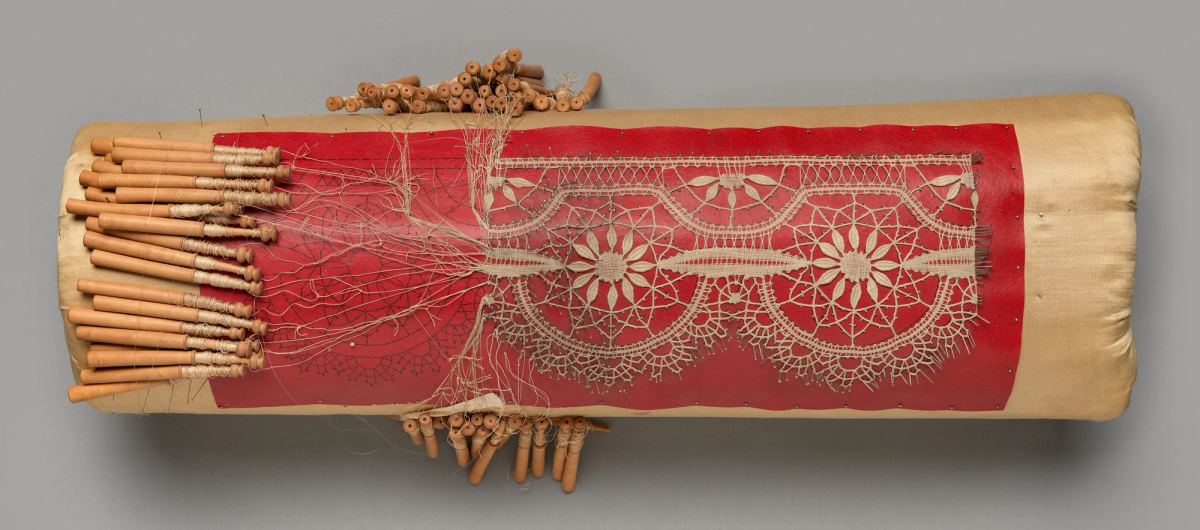
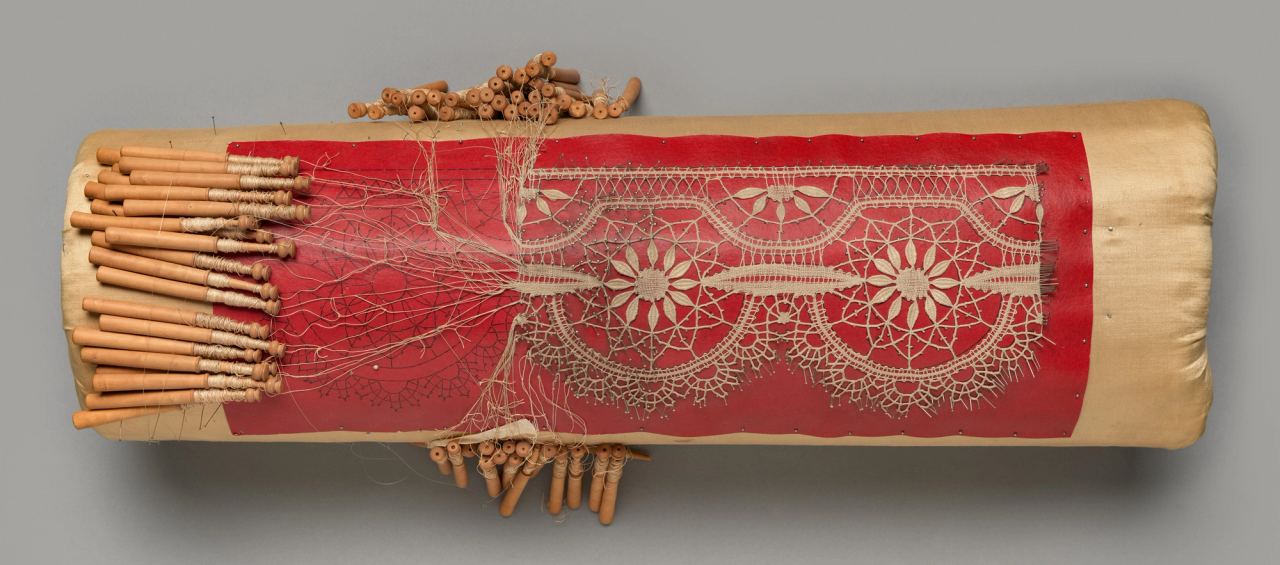
Bobbin lace is made on a firm pillow. A pattern on card or parchment, pricked with holes, is pinned to the pillow; each thread is wound on its own bobbin; and the lacemaker crosses and twists pairs of bobbins, setting a pin at each connection. The pins hold the structure while it grows, and the pillow is what the whole technique is named for.
The 1902 edition of Mrs. Bury Palliser's History of Lace, revised by Margaret Jourdain and Alice Dryden, describes the same equipment: a round or oval stuffed pillow on the worker's knees, parchment with pricked holes, pins through the holes, and a separate bobbin for each thread. It adds that the bobbins were once bone and in the book's day were small round pieces of wood. The pattern, it says, is outlined by interweaving a thread much thicker than the ground threads, which is the gimp.
Caulfeild and Saward add the choreography. The bobbins are handled in pairs, apart from the gimp bobbins, and divided into working and passive threads. The passive ones hang in a fan down the pillow while the workers pass across them from side to side.
You can see the setup in a photograph. A Spanish lace pillow in the Cleveland Museum of Art, dated to the 1800s, still carries a half-finished Torchon edging, with boxwood bobbins hanging off the end. The museum's catalog entry describes the process: linen thread wound on the bobbins, crossed and twisted to make a connection, then a pin placed to space each connection.
What does each leave in the cloth? A side-by-side comparison
Each method leaves a different structure, and the structure is what you read. Needle lace shows looped stitches and a stitched, usually raised outline. Bobbin lace shows plaited or woven areas, a gimp outlining the design, and sometimes pin holes. The table below pulls together what the manuals and the Leiden curators say; read it as a guide to odds, not a set of laws.
| Feature | Needle lace | Bobbin lace |
|---|---|---|
| Tools | One needle, one thread | Many threads on bobbins, a pillow and pins |
| Basic structure | Looped stitches, chiefly buttonhole stitch | Pairs of threads crossed and twisted; solid areas in cloth stitch or half stitch |
| Pattern guide | Pricked parchment; outline thread tacked down, cut away at the end | Pricked card or parchment pinned to the pillow |
| Outline | Cordonnet: a thread, several threads or a coarse thread covered in buttonhole stitches | Gimp: a thicker thread woven along the outline of the design |
| Ground | Looped meshes, often hexagonal, or bars ([brides](glossary:glossary-bride-lace)) | Plaited or twisted meshes, worked with the motifs or added around separate sprigs |
| Marks of the process | Looped stitches, visible under a loupe | Threads that follow the shape of the design; pin holes around solid parts |
| Historic cost | Slow to make, expensive to buy | Worked much more quickly, so cheaper |
How do you tell them apart by eye?
Start with the solid parts. If you can see rows of looped stitches, or a rim that stands up from the surface, think needle. If the solid areas look woven, with threads running along the shape of a leaf or petal, think bobbin. Then check the outline, the ground and the edge, ideally with a loupe or a phone camera in good light.
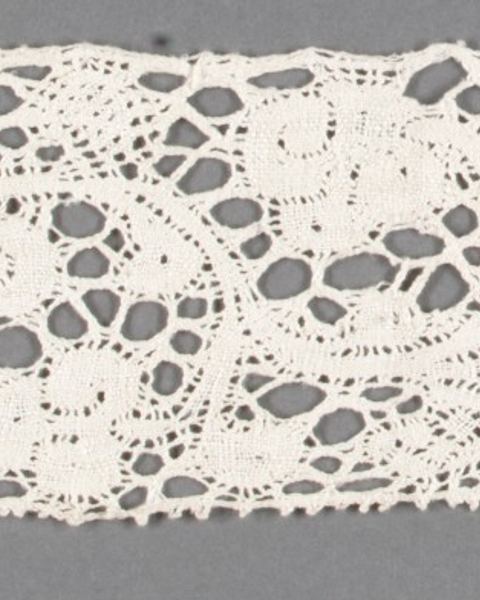
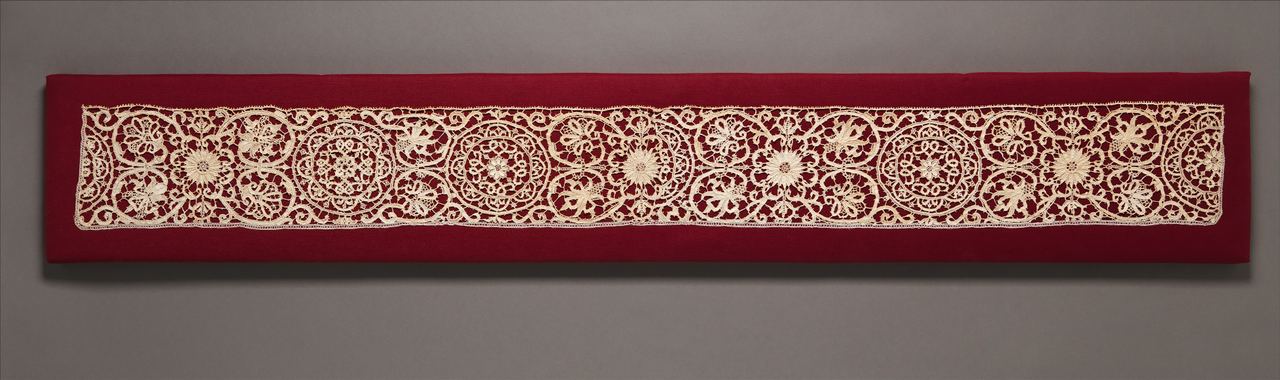
Look at three Metropolitan Museum of Art objects, all in the public domain. The first is cataloged as a border of needle lace from the early seventeenth century. In the picture, round medallions alternate with scrolling leaves, and across the open gaps run thin bars studded with tiny spikes of thread that look like picots. The bars are the kind of connection the 1882 dictionary describes for laces with a bar ground, and the filled leaves and flowers show an outline that stands slightly proud of the surface.
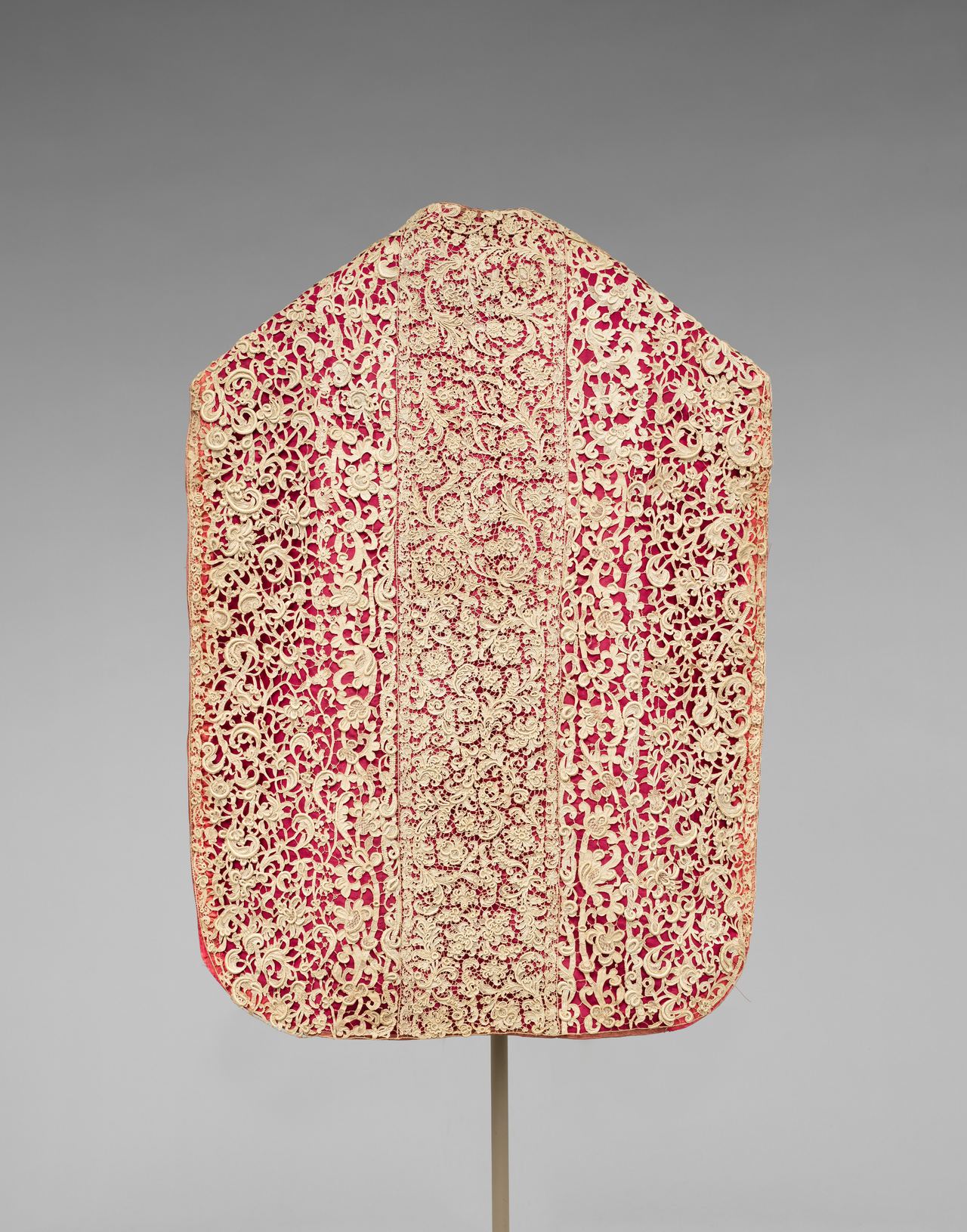
The second is a chasuble, cataloged as needle lace and gros point lace with a silk lining. Even at a distance you can see thick, rounded edges around the leaves and flowers. Caulfeild and Saward say that the lines of buttonhole stitch around each part of a point lace may be thick and raised, or very fine, depending on the lace; this is the thick kind.
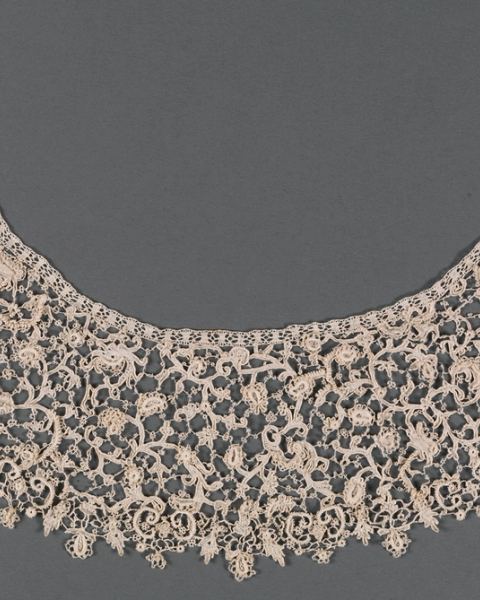
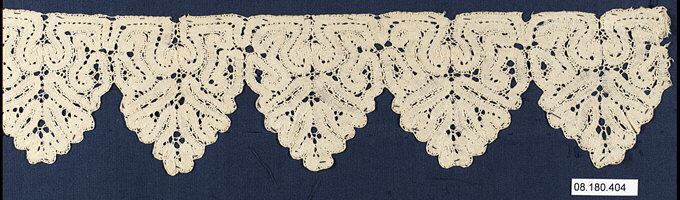
The third is a bobbin-lace border from about 1650. Here the solid parts look more like cloth than like stitching: broad scrolling bands follow the shapes of the design, and the picture appears to show lines of tiny holes along their outlines. The Leiden curators describe the same sign in a handmade bobbin lace, pin holes around the shape of the solid parts, where the threads follow the flow of the pattern.
If you want to see how this compares with machine lace, see Handmade or Machine? How to Read a Piece of Lace. That piece asks whether a human made the lace; this one asks which kind of handwork it is. The two tests work together.
Why do the clues sometimes mislead?
Because lacemakers mixed the two techniques, borrowed each other's designs, and used the same words for both. A single piece can contain needle and bobbin work, and the vocabulary of lace, full of "point" and "pillow", does not always follow the method.
Mixed work is common. Jourdain records Brussels needlepoint whose ground is the pillow-made droschel rather than a needle-made mesh, and says much of the best Brussels needlepoint was grounded that way. The Cleveland Museum of Art catalogs a Russian bed valance of the 1700s as linen with needle lace in cutwork and drawnwork, straight bobbin lace and a tape-lace edging, all in one object. Jourdain adds that from about 1845 Honiton sprigs, once made, were united on the pillow or else joined by the needle. If you are sorting a piece, check each part and not just the first area your eye lands on.
Names are a second trap. Palliser notes that "point" properly means needle-point, but is sometimes applied to pillow lace, as in point de Malines and point de Valenciennes. He also admits that it is hard to define the difference between the cushion used for some needle laces and the pillow of bobbin lace. Do not trust a name alone.
Raised work is a third. It is tempting to treat any raised outline as proof of needle lace, but Jourdain calls raised work the distinguishing mark of Honiton, a bobbin lace, and explains that gimp is often used as a quicker substitute for it. The Leiden glossary says the gimp is mostly apparent in bobbin lace, which is why an outline needs a second look. A thick edge does not decide the question by itself; the structure behind it does.
Finally, one lace could imitate another. Jourdain describes the Brussels needlepoint of about 1720 as made evidently in imitation of Alençon. Pieces were also mended and made up over time, a theme of Mended, Made Up, Made Over, so a label should never replace looking.
Which came first, and why did it matter?
The earliest dates I could confirm favor needle work, though the record is thin. Jourdain notes that reticella is first mentioned in the Sforza inventory of 1493, and is not named in pattern books until Vecellio in 1592. According to Palliser, the same Vecellio book includes "opere a mazette", pillow lace, and later books supply bobbin patterns: Parasole in 1616 ("merli a piombini") and Vinciolo in an edition of 1623. Palliser reports that Flanders and Italy "dispute the invention of lace" and does not settle it, so treat any claim about a first maker with suspicion.
The Textile Research Centre says that the first mentions of lace date to the fifteenth century and that its popularity expanded in the sixteenth. Its glossary lists Chantilly and Valenciennes as continuous bobbin laces, and Venetian lace as a needle lace with raised work, whose look it compares to carved ivory.
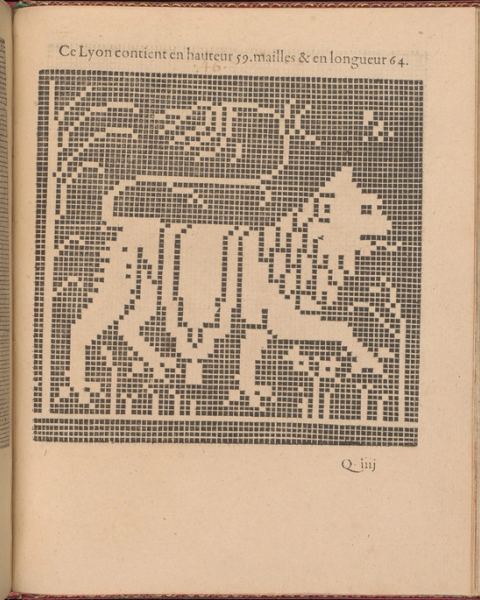
Technique shaped the market. Caulfeild and Saward write that the art of making point lace "fell into decay in the eighteenth century", partly because fashion preferred the light, fine laces of the pillow, and partly because "the Pillow Laces, being worked much more quickly than the Needle, were cheaper to buy". The great needle points such as Alençon, Argentan and Brussels were, in their words, only within the means of the wealthy. For a related craft, the lacis chart in This Lion Is 59 Meshes Tall is a net darned with a needle: close kin, but not either lace type here.
Where can you see both?
Museum records are the easiest place to practice, and one museum will show a large collection in person this winter. The Bowes Museum's Lace and Legacy runs from 14 November 2026 to 11 April 2027 and, according to its page, charts European lace from the sixteenth to the twentieth century. The Metropolitan Museum's lace records give materials such as "needle lace" or "bobbin lace" in the medium line, which makes them handy for practice. Cleveland's open-access records often go further, naming stitches and grounds.
To practice, pick a Met or Cleveland object whose record names the technique, cover the medium line, and decide from the picture. Then check: look at the outline, the solid areas, and the ground. The pieces above are a good place to begin, and the two glossary entries, needle lace and bobbin lace, give the short definitions to keep in mind.
Sources
- Lace and Legacy: Fashion Treasures from The Blackborne Collection. The Bowes Museum. Page read in full: dates 14 Nov 2026 to 11 Apr 2027, 16th to 20th century scope, Joséphine Bowes's 19th-century lace. The page does not mention needle or bobbin lace, so the exhibition is used only as a hook. Accessed October 23, 2026.
- Lace Identification: 7 Examples (cover page, terminology, chapters 1-2). Textile Research Centre, Leiden. Read: the needle/bobbin definition, the glossary (gimp, cloth stitch, Venetian, Chantilly, Valenciennes) and chapters 1 and 2 (pin holes, gimp, cloth stitch in handmade bobbin lace). Accessed October 23, 2026.
- The Dictionary of Needlework (1882). Caulfeild and Saward. Primary. Full text read for the entries Point Lace (method, parchment, fil de trace, cordonnet, picots, decline in the 18th century), Bobbins and Bobbin Lace. Accessed October 23, 2026.
- History of Lace (1902 edition). Mrs. Bury Palliser, rev. M. Jourdain and A. Dryden. Primary. Gutenberg full text read: point and pillow lace, pillow and bobbins, gimp, Vecellio 1592 and later pattern books, point/pillow naming confusion, the dispute over invention. Accessed October 23, 2026.
- Old Lace: A Handbook for Collectors (1908). Margaret Jourdain. Primary. Full text read: glossary (buttonhole stitch, cordonnet, droschel, fond), reticella and the Sforza inventory 1493, Brussels needlepoint with pillow ground, Honiton raised work, gimp and sprigs. Accessed October 23, 2026.
- Lace Pillow, Spain, 1800s (1914.533); Lace Border with Battle Scene (1921.596). The Cleveland Museum of Art. Open Access API records read: CC0 status, the catalog description of bobbin lace on a pillow, and the mixed needle/bobbin technique line of 1921.596. Accessed October 23, 2026.
- Object records 197360, 218985, 214756 (public domain). The Metropolitan Museum of Art. Collection API records read for title, date, medium, dimensions, accession and public-domain flag; images inspected and cropped at full size. Accessed October 23, 2026.
Glossary
Last updated · Markdown · Report an error