Care
How to Store a Quilt or a Vintage Garment
Fold, roll, hang or lay flat? Conservation bodies agree on dark, dry, clean and stable, then disagree on the details. Here is the reasoning behind each rule, with a checklist and when to call a conservator.
The conservation bodies agree on the big things: keep a quilt or old garment dark, dry, clean and out of the attic, and let it touch only stable materials. They disagree on the details, including whether to fold, roll or hang. This guide gives each answer with its reasoning, so you can choose for the piece in front of you.
What do conservators agree on?
The guides we read converge on four points. Store textiles where people live, not in an attic, basement or garage. Keep them out of light. Keep what touches them chemically stable. Check them on a schedule. The disagreements start after that, and they matter less than skipping those four.
The National Archives' Prologue magazine puts the environment rule plainly: an environment comfortable for people suits textiles, while hot attics and damp basements or garages do not (Ritzenthaler, 2016). The American Institute for Conservation (AIC) says light damage is cumulative and irreversible, and that attics and basements, with their sudden swings, are not appropriate for textile storage (AIC).
Should you fold, roll or lay it flat?
Several sources name flat storage as the first choice, and none we read ranks it lower. When flat is impossible, the sources split between folding with padding and rolling on a tube, and each camp has a reason.
Prologue advises storing antique textiles flat with as few folds as possible, and says large flat pieces such as quilts can be rolled around the outside of large-diameter acid-free cardboard tubes. The Canadian Conservation Institute (CCI) explains why flat wins: it supports the whole piece and relieves the fibers of their own weight (CCI Notes 13/2). It reserves flat storage for very fragile or heavily decorated pieces, garments with weak shoulder seams, stretchy knits and bias-cut garments, because it takes space.
Rolling has limits. CCI's rolled-storage note says poor-condition textiles should not be rolled, nor those with stiff surface decoration that could split, nor multi-layer textiles whose layers do not move together (CCI Notes 13/3). The note never mentions quilts. Our reading is that some quilts, with a top, padding and backing stitched together, fit that description, so a fragile one is a poor candidate.
Folding is the everyday reality. The Minnesota Historical Society's textile conservator, Deborah Bede, wrote that quilts are usually stored folded in a box for reasons of space and convenience, and advised planning the folds so previous fold lines are not reused (Minnesota Historical Society, 1997). Winterthur's conservation program says boxed storage in museums requires quilts to be folded, and that set creases weaken the cloth and can lead to tearing (University of Delaware/Winterthur).
| Method | Who recommends it, and when | Caution from the same sources |
|---|---|---|
| Flat | Prologue, CCI, and the UK Quilt Museum ("on a bed between two clean sheets") | Takes space; the piece must be shielded from dust and light |
| Folded in a box | Minnesota Historical Society; Winterthur/Delaware; UK Quilt Museum | Pad every fold with tissue or muslin; change the fold lines |
| Rolled on a tube | Prologue (large flat pieces); CCI (sound, flat textiles) | Not for fragile, stiffly decorated or multi-layer pieces (CCI); Prologue specifies large-diameter tubes |
How often should you refold? The International Quilt Museum says its quilts are refolded every two years, each time along different lines, with tissue layered on top and rolls of tissue supporting the final folds (International Quilt Museum). The V&A suggests checking a packed vintage dress every six months and unpacking and repacking it once a year so creases do not become permanent (V&A). Those are two museums' routines, not a universal rule.
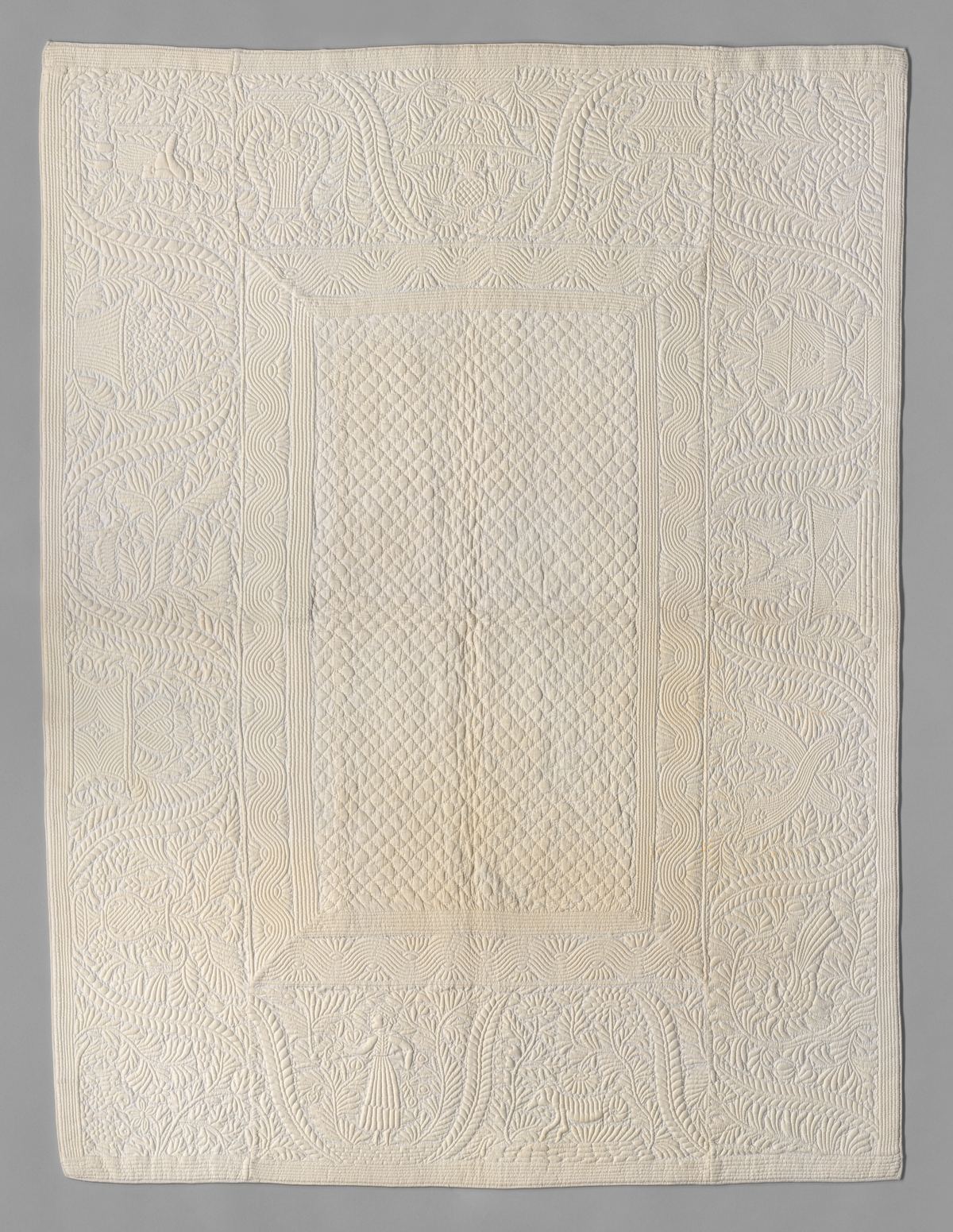
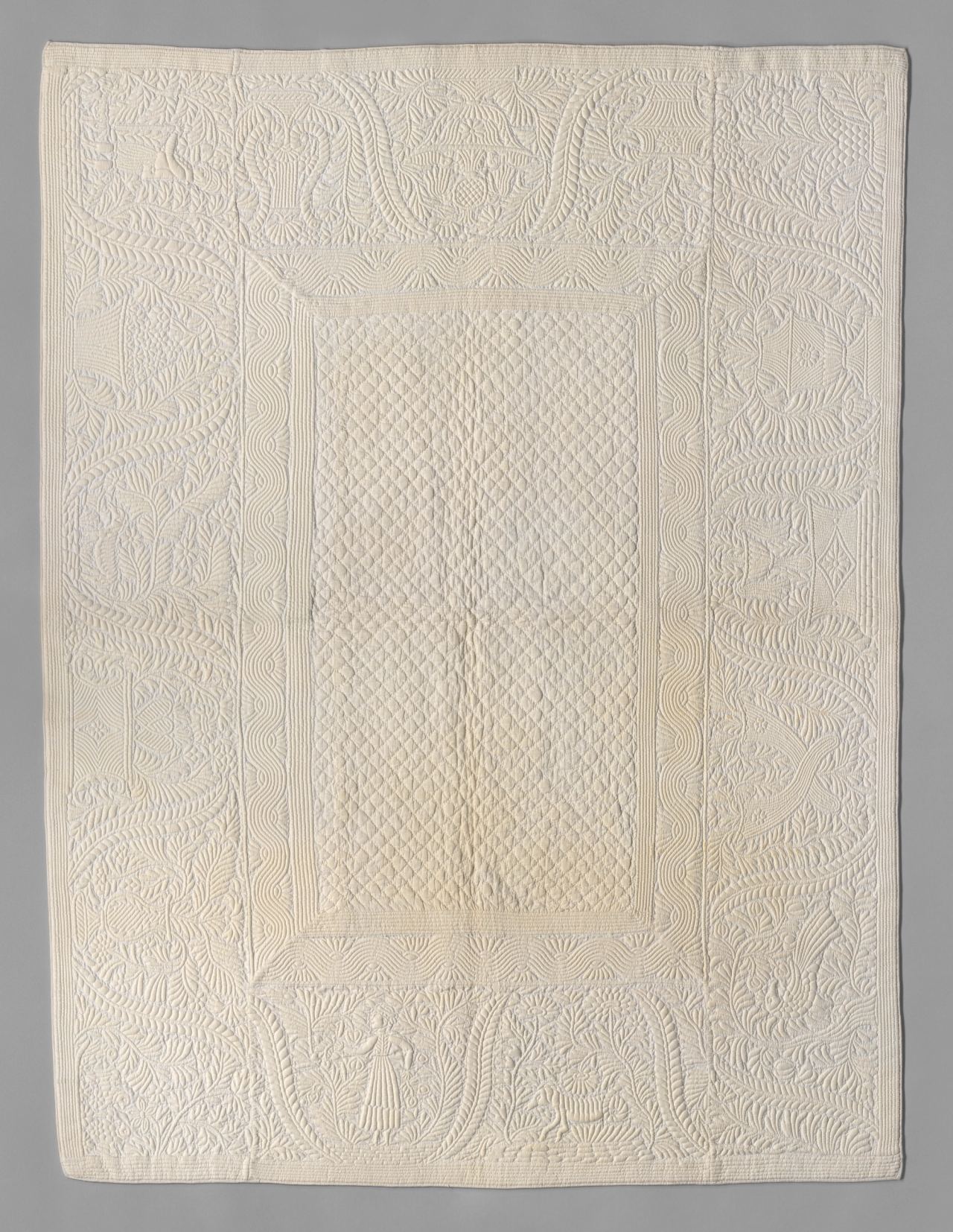
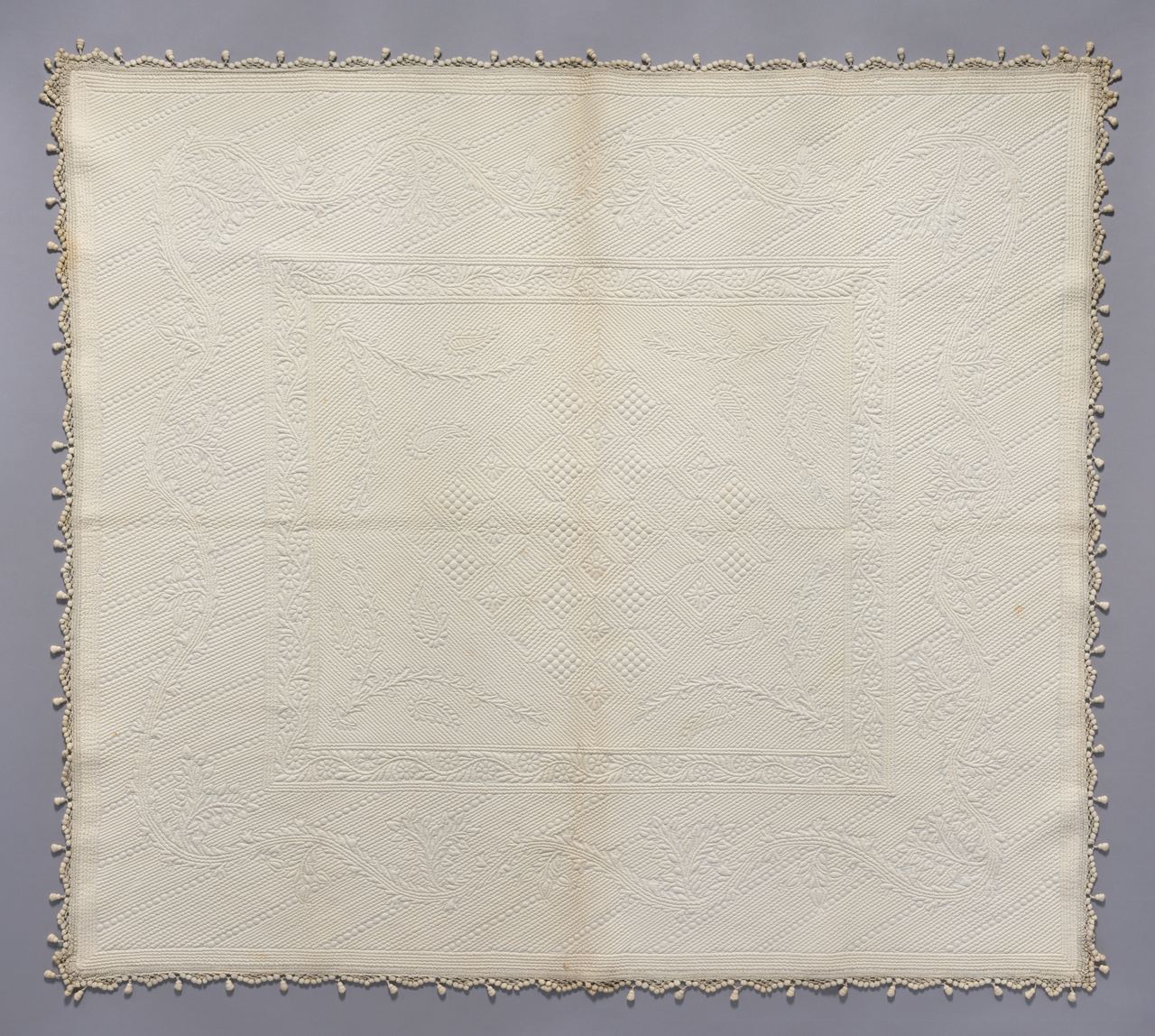
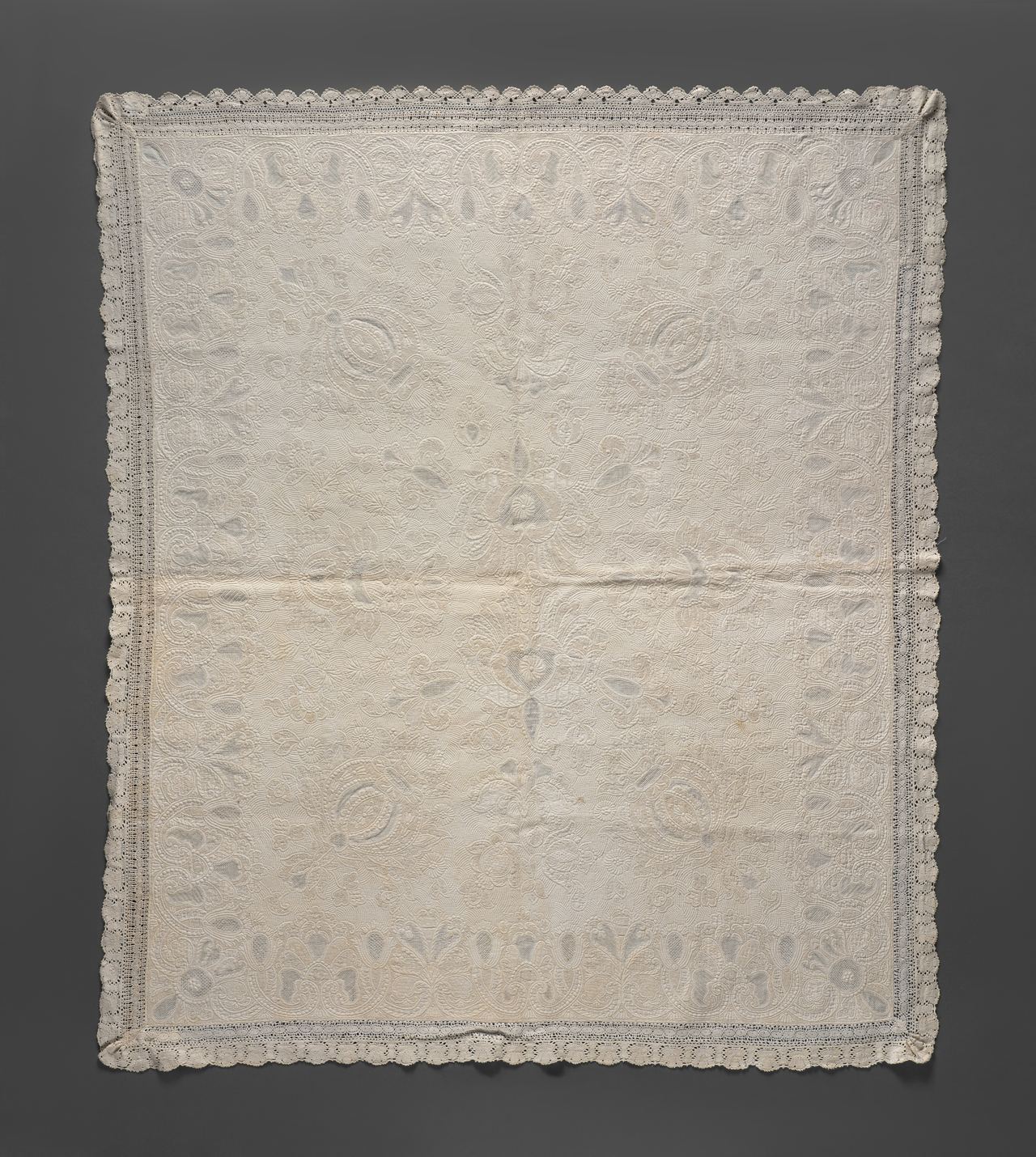
The Metropolitan Museum's photographs show what a crease looks like. In its images of three whitework quilts made between about 1700 and 1800, faint lines near the center of each appear to be fold creases. The Met's records do not say how the pieces were stored, and use can crease a quilt as well, so treat them as an example of what to look for rather than evidence of any storage method.
Can you hang a vintage garment?
Only if it is sound, and then only on a padded hanger. This is the most contested question in the sources, and the disagreement is about the condition of the garment, not about hangers.
Prologue says antique garments should not be hung and that flat storage is best. The V&A, writing about vintage wedding dresses, advises avoiding long periods on a hanger, because it stresses the seams and shape. CCI is more permissive: structurally sound costumes are often hung, but it says to store flat instead if a piece is fragile, heavily decorated or has shoulder seams already weakened by hanging, and to avoid hanging knits and bias-cut pieces (CCI Notes 13/5). Straight-cut garments such as kimonos go flat or on a padded rod through the sleeves, and sound skirts hang from the waist.
If you hang, CCI says not to use lightweight wire hangers. It pads a wooden or plastic hanger with batting to form a wide, cushioned shape with no sharp edges, and covers it in prewashed cotton. It also spaces garments at least 10 centimeters (about 4 inches) apart and prefers fabric dust covers. The Museum of the Albemarle agrees that padded hangers are best, and adds that garments with fragile shoulder seams or heavy beadwork should not hang on any hanger (Museum of the Albemarle). The V&A warns that plastic dress covers let light in over time and cannot adjust to humidity changes, which risks condensation and mold.
What should touch the cloth: tissue, boxes, wood, plastic?
Anything in direct contact should be chemically stable. AIC says most wood, packing cardboards and some plastics are chemically unstable and recommends acid-free unbuffered boards, rolling tubes and boxes from conservation suppliers. Beyond that, the sources diverge in three places.
Tissue: buffered or unbuffered. CCI warns that buffered materials contain alkalis that can damage wool, silk and some dyes. The National Park Service's Conserve O Gram 4/9 notes that many references recommend buffered paper for cotton and linen and unbuffered for wool and silk. It then says the Park Service's Harpers Ferry Center conservators recommend soft, unbuffered, neutral-pH tissue for all textiles, not for chemical reasons but to avoid confusion among the many buffered products. Many buffered tissues, it adds, have hard corners when folded and are too stiff for some fabrics. CCI also specifies unbuffered materials. If you cannot tell the fiber, or the piece mixes cotton and silk, unbuffered is the safe choice.
Wood and cedar. The International Quilt Museum says cedar chests are of little use as moth repellents, because their value lies in being tightly closed, and that wood releases acidic oils, so shelves and chests should be lined with washed cotton sheeting, muslin or acid-free tissue. Minnesota's conservator wrote that trunks, cedar chests and dresser drawers release acids that damage fibers. CCI says to avoid unsealed or uncoated wood. The Museum of the Albemarle goes furthest: no direct contact with wood, including wooden hangers. Winterthur's blog is the exception for hangers, saying a wooden hanger is acceptable if covered with an aluminum foil barrier (Winterthur, 2025).
Plastic. This is the sharpest split. The UK Quilt Museum says never to store fabrics in plastic bags because they increase the growth of mold (Quilt Museum). The Museum of the Albemarle bars plastic dry-cleaning bags and totes. Yet the International Quilt Museum allows new high-density polyethylene or polypropylene containers, lined with tissue or muslin, and Winterthur calls polyethylene bins a cost-effective option for home collectors because they do not emit volatile gases. CCI lists lidded polypropylene and polyethylene boxes. Our reading: the sources that allow plastic name the type (polyethylene or polypropylene) and line it, while the bans cite bags and totes of unknown type. The Minnesota note even suggests wrapping plastic loosely around a box without sealing it. If you cannot identify the plastic, a lined acid-free box is the choice no source argues against.
Two small items. Mothballs: the International Quilt Museum says to avoid them because the active ingredient is harmful to humans. Pests are handled by cleanliness and inspection, and Minnesota notes that insects are usually not a problem for quilts unless they contain wool.
Where should it live: light, temperature, humidity?
In a dark, stable room where people live. The sources give numbers, and they differ.
| Source | Temperature | Humidity (relative, as far as the source says) |
|---|---|---|
| International Quilt Museum (home advice) | 62 to 72°F | 45 to 55% |
| International Quilt Museum (its own spaces) | a constant 68°F | 50% |
| Museum of the Albemarle | 68 to 75°F, constant | 40 to 57%, constant |
| Minnesota Historical Society (1997) | "the standard is 70° F" | 50% |
| AIC | avoid areas above 80°F and sudden changes | best kept constant between 35 and 65% |
Read the pattern, not the digits: moderate, and above all steady. AIC explains that swings make organic materials expand and contract, and that high humidity brings mold and bleeding dyes. For light, the International Quilt Museum says quilts on display are shown for a maximum of one year out of every 10, and that damage from light is cumulative and irreversible. None of the guides we read gave a light level in lux, so we give none. For display at home, the Museum of the Albemarle suggests drawing curtains and using UV-filtering film on windows.
Should you wash it first?
Usually not, and never as a first resort. The sources agree that cleaning is a decision, not a chore. The International Quilt Museum says washing risks color bleeding and agitation damage even by hand. Prologue says to weigh a piece's value and condition before washing, mending or dry cleaning, and to avoid cleaning valuable antiques. Minnesota's conservator adds that dry cleaning is usually not a good method for quilts, because machines agitate and spin, and that some quilts cannot be wet-cleaned or dry-cleaned at all because their dyes bleed. In some cases, she wrote, the soil has to be accepted as part of the object's history. She also noted that some dark brown or black dyes in printed cottons can weaken the cloth.
There is a milder view. The Delaware program says that if you have washed a quilt before there is no reason not to, but warns that on a first wash dyes can bleed and cause irreversible damage, and never to bleach. For loose dust, several sources agree on vacuuming through a screen or net at low suction. AIC, the International Quilt Museum and Minnesota all describe it.
Clean, dry hands are the other point of difference. AIC says to wash hands often or wear inexpensive white cotton gloves, and to avoid skin creams. The International Quilt Museum's staff wear white cotton gloves, while the Minnesota note says gloves are unnecessary if hands are clean.
At a glance: a checklist for a quilt or a vintage dress
| Do | Why, and who says so |
|---|---|
| Choose a spare room, not the attic or basement | Stable climate (AIC, Prologue, Winterthur) |
| Keep it dark: a closed box, or sheets over a shelf | Light damage is cumulative (AIC, International Quilt Museum) |
| Lay flat if you can; if you fold, pad every fold | Fewer, softer folds (Prologue, CCI, Quilt Museum) |
| Change the fold lines when you refold | Avoids permanent creases (IQM, V&A) |
| Line boxes and shelves with washed cotton muslin or acid-free tissue | Acids from wood and board (IQM, Minnesota, CCI) |
| Use unbuffered tissue when in doubt | Safe for silk and wool (NPS 4/9, CCI) |
| Hang only sound garments, on padded hangers | Weight across shoulders (CCI, Albemarle) |
| Check it every six months | Early pests and mold (AIC, V&A) |
| Do not wash or mend a valuable piece yourself | Irreversible risk (Prologue, AIC) |
When should you call a conservator?
Before you repair, clean or mount anything valuable, or whenever the piece is fragile, stained, shedding, moldy or infested. AIC advises contacting a professional textile conservator before attempting to repair, clean or mount a textile, and says the conservator will examine it, document its condition and propose a treatment.
AIC lists a sweet or musty odor, increasing discoloration, small irregular holes, and insect casings or excrement as signs of active deterioration or infestation, and Prologue adds webbing and carcasses. Minnesota's conservator notes that silk quilts very often are in poor condition, with splitting and worn fabric, and that in general silk quilts cannot be cleaned. The V&A says that for a stained vintage dress it may be worth consulting a conservator in case localized treatment is possible.
AIC's directory is called Find a Professional Member and sits on the AIC site. You choose a specialty, which includes Blankets and Quilts, and Costumes and Accessories, then optionally add a location and radius. AIC's older leaflet called it "Find a Conservator". The directory lists AIC Professional Members, whose training and experience have been reviewed by peers, and the page suggests searching one specialty at a time.
Where can you see one?
The Metropolitan Museum's corded quilt, ca. 1700 and stuffed quilt, ca. 1750 to 1800 are in its open-access collection, with the corded crib quilt. For the history of what these objects are called, see Quilt, Coverlet, Counterpane: What Is the Difference?. To learn how to read a garment's age before you store it, see How to Date a Garment from Its Construction, and for a layered, stitched textile from another tradition, Nakshi Kantha: Quilts Stitched from Worn Cloth.
Sources
- Preserving Textiles. Mary Lynn Ritzenthaler, Prologue (US National Archives), Summer 2016. Full text read via fetch tool: flat storage, rolling quilts on large-diameter tubes, no hanging for antique garments, light, cleaning cautions, AIC referral. Accessed October 24, 2026.
- Care and Conservation. International Quilt Museum. Full page read via fetch tool: museum and home folding/rolling, wood and cedar, HDPE/PP containers, temperature and humidity figures, washing, pests, display limits. Page undated. Accessed October 24, 2026.
- How to Care for Your Textiles. Museum of the Albemarle. Full page read via fetch tool: acid-free boxes, no wood or plastic, padded hangers, temperature and humidity figures, UV protection. Accessed October 24, 2026.
- Flat Storage for Textiles (CCI Notes 13/2, rev. 2008). Canadian Conservation Institute. Full page read via fetch tool: when flat storage is used, lining, unbuffered materials, padding folds, wood and plastic boxes. Accessed October 24, 2026.
- Rolled Storage for Textiles (CCI Notes 13/3, rev. 2008). Canadian Conservation Institute. Full page read via fetch tool: textiles unsuited to rolling, tubes, unbuffered tissue, buffered alkalis harm wool/silk. Quilts are not mentioned. Accessed October 24, 2026.
- Hanging Storage for Costumes (CCI Notes 13/5, rev. 2009). Canadian Conservation Institute. Full page read via fetch tool: when to hang or store flat, padded hangers, covers, spacing. Accessed October 24, 2026.
- Caring for Your Treasures: Textiles. American Institute for Conservation (AIC) and FAIC. Full two-page PDF text read: light, temperature and humidity figures, six-month inspection, unstable wood/cardboard/plastics, when to consult a conservator. Undated. Accessed October 24, 2026.
- Find a Professional Member. American Institute for Conservation. Page read via fetch tool: directory specialties (Blankets and Quilts; Costumes and Accessories), how to search. Older leaflet calls the tool Find a Conservator. Accessed October 24, 2026.
- Conserve O Gram 4/9: Buffered and Unbuffered Storage Materials. National Park Service. Full text read (PDF): buffered vs unbuffered; textiles row of the table; Harpers Ferry Center recommendation. Undated in the PDF. Accessed October 24, 2026.
- Preserving Historic Quilts, September 1997. Deborah Bede, Minnesota Historical Society (TECH TALK). Full text extracted from the PDF and read: folded box storage, wood acids, plastic sheeting, 70 F and 50 percent RH, cleaning, silk, dyes. Accessed October 24, 2026.
- Caring for vintage wedding dresses & veils (updated 17 April 2024). Victoria and Albert Museum. Full page read via fetch tool: box and tissue, hanging, plastic covers, six-month check and annual repack, conservator advice. Accessed October 24, 2026.
- Attics and Basements and Closets, Oh My! Part 10: Quilts and Bedspreads. Winterthur / University of Delaware Program in Art Conservation (Annabelle Camp and Jess Ortegon). Full page read via fetch tool: folded boxed storage, padded folds, hanging at home, first-wash warning. Undated. Accessed October 24, 2026.
- Caring for Your Collections: Textile Conservation Tips (1 April 2025). Amber Marcoon, Winterthur Museum, Garden & Library. Full page read via fetch tool: polyethylene bins, hanging criteria, foil-covered wooden hangers, unbuffered tissue. Accessed October 24, 2026.
- Textile Terrors: protecting quilts from harm. The Quilt Museum (UK). Full text extracted from the PDF and read: folding with tissue, no plastic bags, flat on a bed, pest note. Undated. Accessed October 24, 2026.
- Corded quilt, 2022.462.4 (864831); Stuffed quilt, 2022.462.5 (864832); Corded crib quilt, 2022.462.1 (864828). The Metropolitan Museum of Art (Collection API). Object API records read for title, date, medium, dimensions, credit line, isPublicDomain true. Met web pages return 429 to bots, so the record text was not read there. Accessed October 24, 2026.
Glossary
Last updated · Markdown · Report an error