Quilt, Coverlet, Counterpane: What Is the Difference?
A quilt is stitched in layers, an American coverlet is woven on a loom, and a counterpane is an older word for any bed cover. British usage shifts the middle term. Here is how to tell them apart on a museum label.
A quilt is a layered bed cover held together by stitches or ties. In the United States a coverlet usually means a bed cover woven on a loom, though British sources use the word for a two-layer pieced cover without wadding. A counterpane is an older word for the top cover of a bed, and museums apply it loosely.
This guide covers English-language museum and dictionary usage. The three words overlap, and the sources below do not always agree, so each section says whose usage it describes.
What is a quilt?
Merriam-Webster defines a quilt as a bed coverlet of two layers of cloth filled with padding and held in place by ties or stitched designs. The Quilters' Guild of the British Isles, in a text shared by the Quilt Museum, spells out three layers: a top, a filling called wadding or batting, and a backing, held together by quilting stitches or, in a simple tied quilt, by knots.
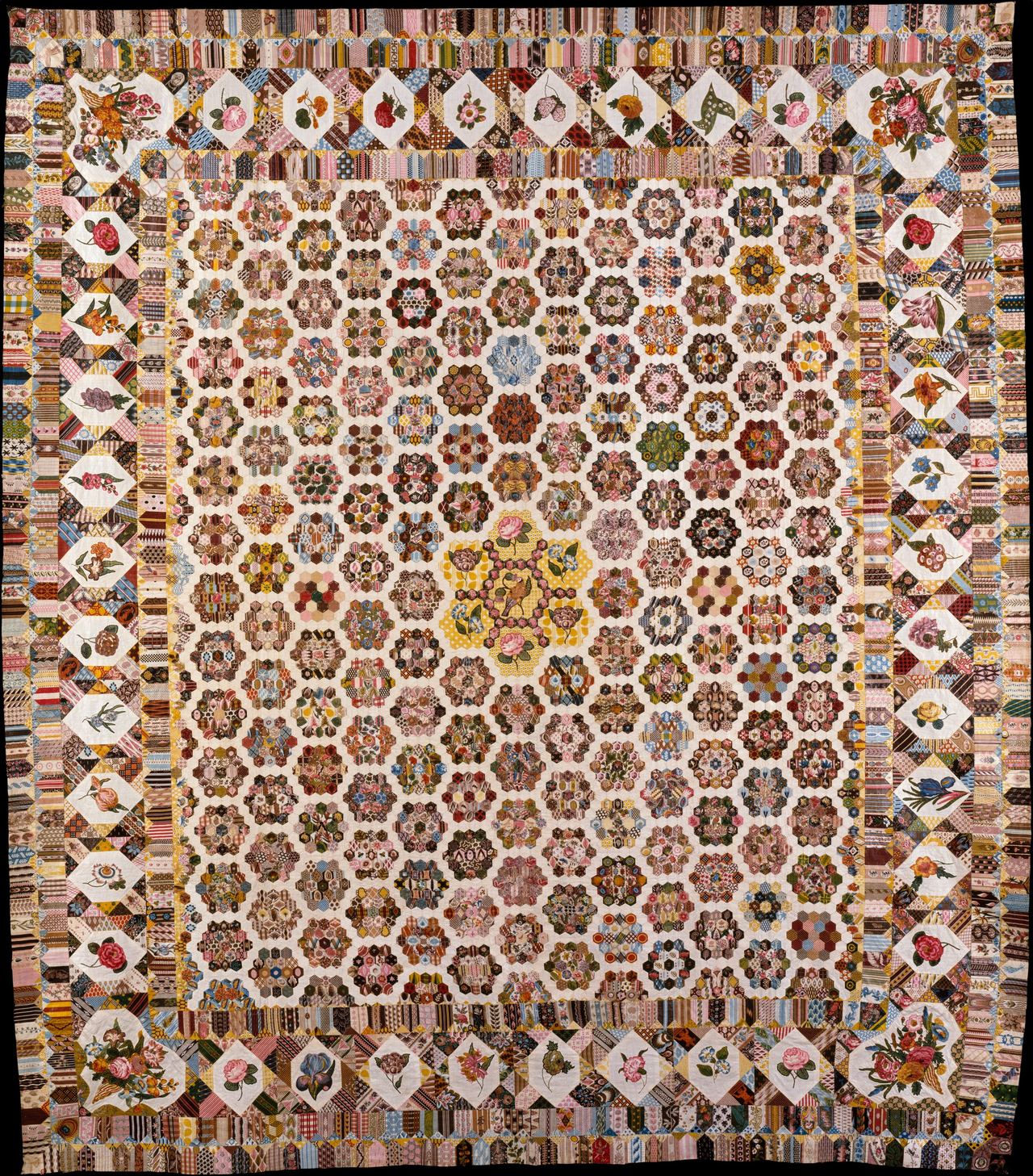
"Pieced," "appliquéd" and "whole-cloth" describe the top, not the object. The same Guild text says the top is either a single sheet of fabric or patchwork made by joining pieces. A pieced top is sewn from many small patches, as in the Met's quilt of 1820 to 1850, whose center is a field of hexagon rosettes with embroidered flowers in the border. In appliqué, shapes are sewn onto a base instead. A whole-cloth top is one piece: the V&A catalogs an Indian cotton quilt of about 1858 as "whole cloth, with wadded quilting."
What is a coverlet?
In US museum usage, a coverlet is a woven bed cover. The National Museum of the American Coverlet puts it as "woven bedcovers, used as the topmost covering on a bed." It also says a quilt is generally assembled from existing cloth, while a coverlet is made from scratch, and that coverlets are reversible. LancasterHistory makes the same split: a quilt has three parts, a coverlet is a single layer woven on a loom.
The National Park Service describes American coverlets as woven in almost every community, from the colonial era until the late nineteenth century. Overshot coverlets were woven at home on a four-harness loom. Double-cloth coverlets needed more elaborate looms and professional weavers. After the early 1800s, an attachment based on the Jacquard loom let weavers produce pictorial designs more easily. (For how Jacquard differs from other pattern-weaving, see dobby versus jacquard.)
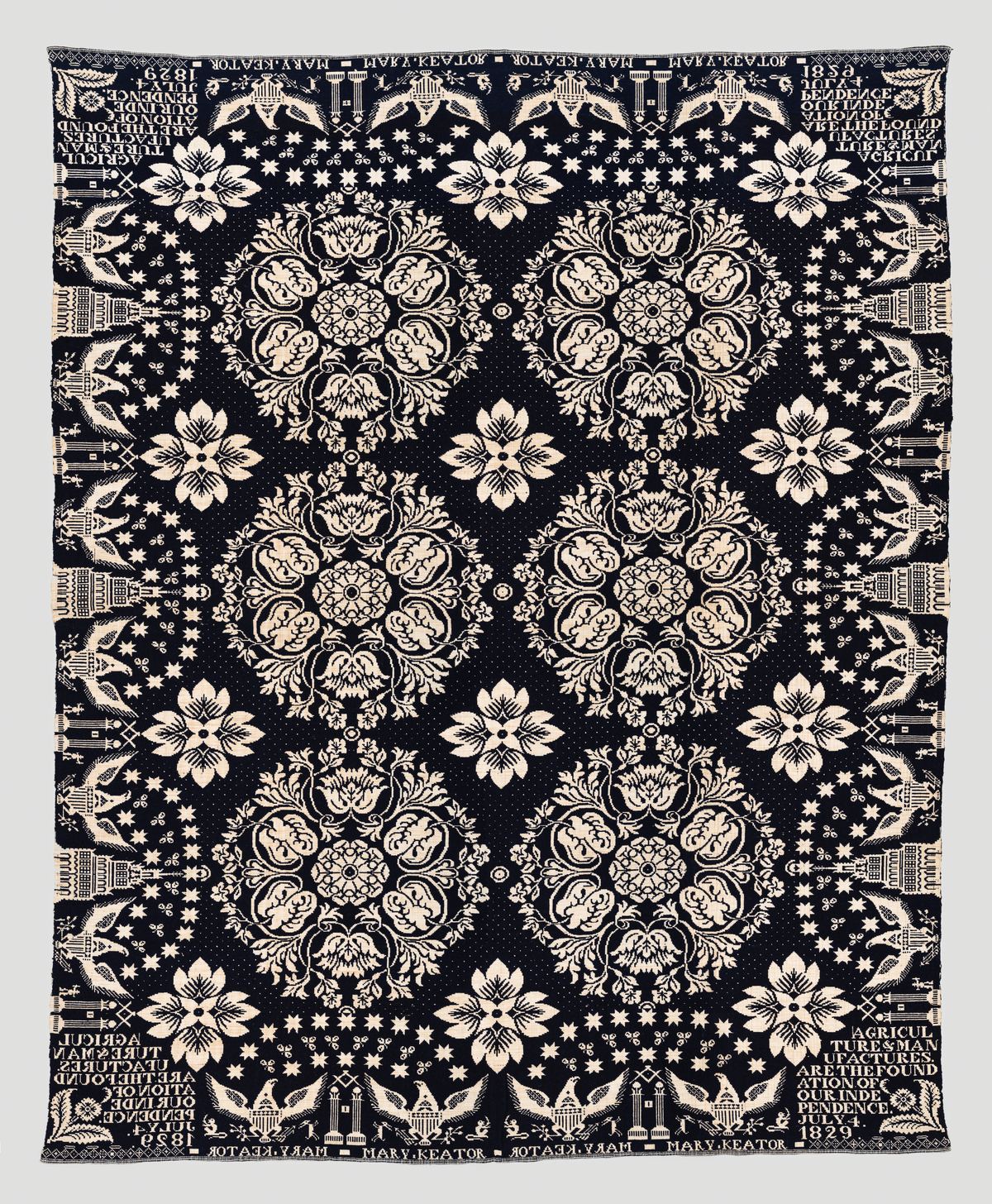
The Met's 1829 coverlet is wool and cotton in double cloth, and its woven border carries a date and a name. The Met's record lists Mary Keator as the person it was made for, which fits the coverlet museum's note that a woman's name on a figured coverlet usually names the client rather than the weaver. Another Met coverlet, by Peter Leisey, about 1838 to 1840, is recorded as woven "on a hand loom with a Jacquard attachment."
What is a counterpane?
A counterpane is a bedspread. Merriam-Webster dates the word to 1626 and traces it to a Middle French phrase meaning "embroidered quilt." Wiktionary gives the ultimate source as Latin culcita puncta, "stitched bedding." Dictionary.com labels the word "older use," glossing it as a quilt or coverlet for a bed. So the word began as a quilt and drifted into a general term for the cover on top.
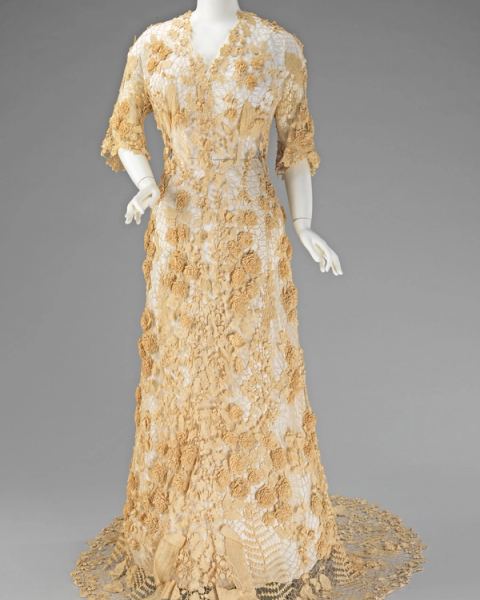
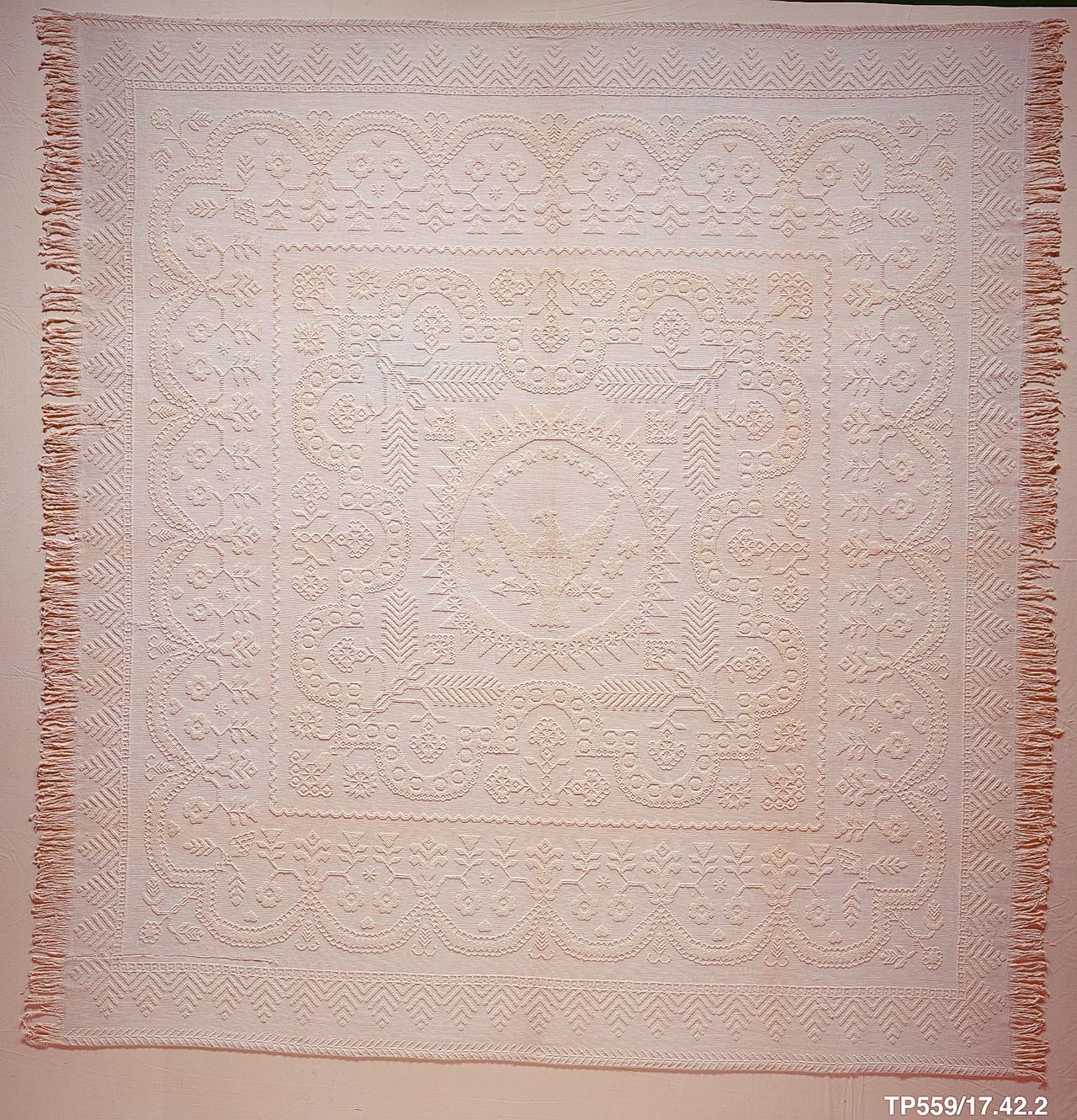
Museums still use it, and not consistently. The Minneapolis Institute of Art holds a "Marcella counterpane" of woven cotton. Its record explains that "woven quilting," a double weave, was developed in 1763, according to the museum, by the British weaver Robert Elsden to imitate expensive hand-stitched Marseilles work. The Met titles a woven cotton piece of about 1820 to 1835 "Counterpane, Bolton type" and a woven cotton piece of about 1865 "Quilt, Marseilles type." The first is pictured here, and both are recorded as woven cotton. The V&A uses the word as an object type for an embroidered cotton cover from Sindh of about 1900.
How does usage differ between the US and the UK?
The sharpest gap is the word coverlet. The Quilters' Guild text says a coverlet is made of two layers with no wadding and usually has a patchwork top, and cites a silk patchwork coverlet dated 1718 with 182 blocks. The V&A catalogs an English cord-quilted linen bed cover of 1720 to 1750 as a "coverlet." An American collection reading the same word would expect a weaver's work.
| Term | US museum usage | British usage | Test on the object |
|---|---|---|---|
| Quilt | Layered and stitched or tied | The same; wadding is part of the definition | Is there a filling and a separate back? |
| Coverlet | Woven on a loom, reversible | Two layers without wadding, often patchwork; also applied to quilted linen | Woven structure, or sewn pieces? |
| Counterpane | Dated word; Met uses it for woven cotton | Dated word; V&A uses it for an embroidered cover and in an old India Museum slip book | Rely on the technique field |
Older labels preserve the drift. The V&A's slip-book entry for the Hyderabad cover, from its 1879 transfer from the India Museum, reads "Cotton Counterpane / Soojnee / Hyderabad / 1858 / Quilted." The modern catalog calls the same object a quilt.
How do you read a museum record or a seller's listing?
Treat the title word as a hint and read the materials line. Nothing in the sources above suggests that any one word is used the same way everywhere. These checks sort most cases:
- Read the technique. "Double cloth," "woven" or "Jacquard attachment" points to a loom-made coverlet or woven counterpane. "Pieced," "appliquéd" or "wadded" points to a quilt.
- Check the back. A woven coverlet is meant to be used on either side; a quilt has a separate backing fabric.
- Look for a filling. A British "coverlet" has none, and a quilt by definition does.
- Note the country and date. American woven coverlets run from the colonial era to the late 1800s.
- Expect older names to be loose. A "counterpane" in a 19th-century label may be a quilt, a woven cover or simply a bedspread.
This guide did not survey seller listings. The same checks apply: trust the photographs and the stated materials over the headline word.
Where can you see them?
The Met's American Wing records for the 1829 coverlet, the Bolton counterpane and the Leisey coverlet are open-access. The V&A's online records include the Hyderabad quilt. Another term where the name misleads is the Bayeux Tapestry; see why it is embroidery, not tapestry.
Sources
- Quilt; Coverlet; Counterpane (dictionary entries). Merriam-Webster. Read all three entries: quilt (two layers, padding, ties or stitched designs; 14th c.), coverlet ("bedspread"; 14th c.), counterpane ("bedspread"; 1626; from Middle French coute pointe, "embroidered quilt"). Accessed October 21, 2026.
- Counterpane. Dictionary.com. Read: American definition "a quilt or coverlet for a bed; bedspread", label "older use", origin culcita puncta. Accessed October 21, 2026.
- counterpane. Wiktionary. Read: definition, Latin culcita puncta "stitched bedding"; page notes its etymology is incomplete. Used for the Latin source only. Accessed October 21, 2026.
- What is a Quilt? (PDF leaflet). Quilters' Guild of the British Isles, text by Bridget Long, shared by the Quilt Museum. Text extracted with pdftotext and read in full: quilt = top, wadding, backing; tied quilts; coverlet = two layers, no wadding, usually patchwork top; 1718 silk patchwork coverlet, 182 blocks. Accessed October 21, 2026.
- What is a Coverlet?. National Museum of the American Coverlet. Read in full: coverlets are woven bedcovers; quilts assembled from existing cloth, coverlets made from scratch; reversible; figured coverlets by professional weavers, woman's name usually the client. Does not discuss double cloth or Jacquard. Accessed October 21, 2026.
- Woven Coverlet. National Park Service, Jefferson National Expansion Memorial. Read in full: wool design on linen or cotton base; colonial era to late 19th century; overshot on a four-harness home loom; double cloth by professionals; Jacquard attachment from the early 1800s. Accessed October 21, 2026.
- Peter Harting, The Coverlet Weaver. LancasterHistory. Read: quilt has three parts, coverlet a single layer woven on a loom; coverlets reversible; Jacquard loom 1803 with punch cards. Its remark that coverlets were made in two pieces joined by a center seam was not used (NPS says most Jacquard coverlets were full size without a middle seam). Accessed October 21, 2026.
- Marcella Counterpane (90.136), catalog text. Minneapolis Institute of Art. Read the full catalog text through the museum's search API (the web page itself returned no text): Marseilles work; woven quilting, a double weave, developed in 1763 by Robert Elsden per the museum; Marcella counterpanes by mid-19th century. Elsden attribution rests on this record only and is attributed to it. Accessed October 21, 2026.
- Coverlet, 1829 (2021.227); Coverlet, Peter Leisey (14.22.1); Counterpane, Bolton type (17.42.2); Quilt, Marseilles type (1980.498.4); Quilt, 1820-50 (1987.63). The Metropolitan Museum of Art. Records read through the Met Collection API (CC0, public domain flag true): titles, dates, media, credit lines, maker/collector fields. The Met web pages returned 429 and were not opened, so no catalogue essay text is used. Accessed October 21, 2026.
- Quilt, Hyderabad, ca. 1858 (05836(IS)). Victoria and Albert Museum. Record read through the V&A API: "Cotton quilt, whole cloth, with wadded quilting"; slip book entry "Cotton Counterpane / Soojnee / Hyderabad / 1858 / Quilted"; transferred from India Museum 1879. Accessed October 21, 2026.
- Cord quilted and embroidered linen coverlet, England, 1720-1750 (T.209-1983). Victoria and Albert Museum. Record read through the V&A API: catalogued as a coverlet; two layers of linen, cord quilting. Accessed October 21, 2026.
- Counterpane, Sindh, ca. 1900 (IS.12-1981). Victoria and Albert Museum. Record read through the V&A API: object type Counterpane, embroidered cotton. Accessed October 21, 2026.
Glossary
Last updated · Markdown · Report an error