Technique
Which Embroidery Should You Learn First?
What is the difference between cross-stitch, crewel and surface embroidery, and which should a beginner start with? A decision guide with museum examples, a comparison table and a sizing tip.
Start with cross-stitch if you want a chart to follow, surface embroidery if you want to draw with thread, and sashiko if one simple stitch is enough. Crewel is surface embroidery in wool, so it is a good second step rather than a different path. What separates them is mostly one question: do you count the threads of the cloth, or ignore them?
What is the difference between counted and surface embroidery?
Counted embroidery places each stitch by counting threads or squares in the cloth, so the weave itself is the grid. Surface (also called free or freestyle) embroidery ignores the weave: you draw a design on plain cloth and stitch over the lines. The Victoria and Albert Museum notes that there is no universal way of classifying embroidery, but its guide uses this split, with whitework as a third group.
That one choice drives everything else on this page. Counted work wants an evenly woven cloth with a visible grid, and the design arrives as a chart. Surface work wants a smooth, stable cloth, and the design arrives as a drawing. The Embroiderers' Guild of America puts it the same way: counted work relies on a visible grid, while plain weave suits surface and freestyle embroidery that is less reliant on a grid.
Cross-stitch, blackwork (in its counted form) and the Japanese kogin all sit on the counted side in the V&A's guide. Crewelwork and stumpwork are filed under freestyle. Sashiko is a third case, covered below.
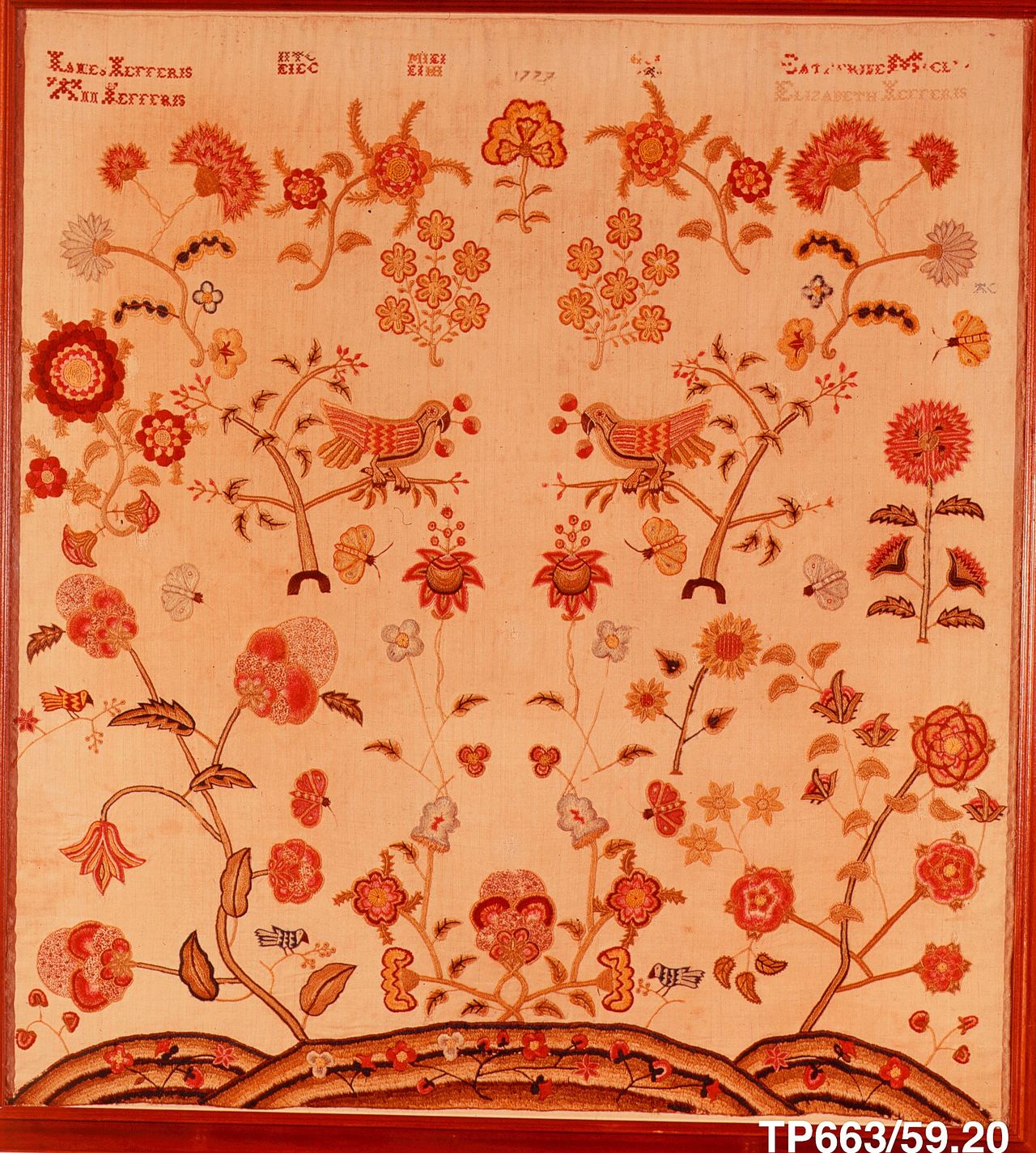
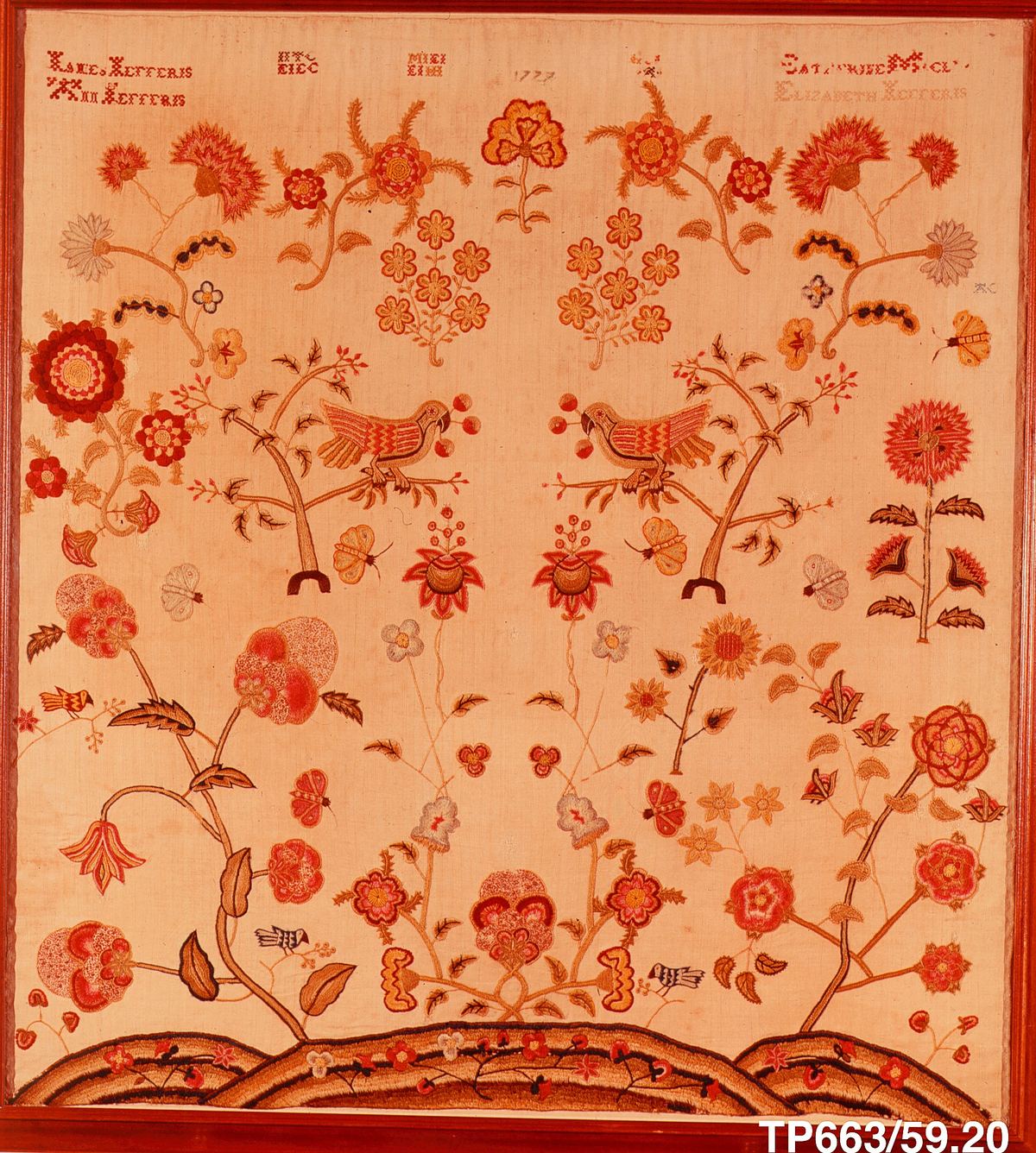
One object shows both ideas at once. The Metropolitan Museum's embroidered picture by Elizabeth Jefferis, dated 1777, is recorded as linen embroidered with crewel wool. The parrots and flowers are worked in free-form wool embroidery, while the names and the date across the top appear, when the image is enlarged, to be built from tiny crossed stitches. The Met's record does not say so, which is why this article says "appear."
Why are people starting now?
The demand figures are secondary, and they measure shopping and searching rather than how many people actually stitch. Luxus Plus, reporting on 7 April 2026 on Etsy's Spring-Summer 2026 trends report, lists beginner embroidery kits among the items it says are seeing real success, up 175%. The article does not state the period that percentage covers. Stylist, summarizing the same Etsy report, describes a "soft stitch era" in which crochet, embroidery and stitched textures are stepping into the spotlight.
La Voce di New York, on 23 September 2026, reports that according to the 2026 Michaels Creativity Trend Report, searches for embroidery, knitting and crochet rose 136% in six months. These are one outlet's readings of two companies' data. The underlying reports were not available to read, so treat the numbers as signals of interest, not proof of a boom. The craft itself is far older than the trend.
Which embroidery should a beginner try first?
There is no single right answer, but there is a sensible way to decide. Ask what kind of frustration you can live with. Counted work frustrates through arithmetic: a miscounted row is wrong all the way across. Surface work frustrates through drawing and decisions: nothing tells you where a stitch goes. Sashiko frustrates through evenness: one stitch type, repeated until it is consistent.
| Style | Fabric | Thread | Tools | What it teaches | Museum example |
|---|---|---|---|---|---|
| Cross-stitch (counted) | Evenweave with a visible grid: Aida or linen | Any thread that fills the square; silk on the samplers below | Needle, chart | Counting, tension, reading a chart | Sampler by Rebekah White, 1766, Met 1984.331.8 |
| Surface (free) embroidery | Smooth plain weave such as linen or cotton | Anything: silk, cotton, wool | Needle, a way to transfer the design | Stitch vocabulary, shading, composition | Embroidered picture by Elizabeth Jefferis, 1777, Met 59.20 |
| Crewelwork (surface, in wool) | Traditionally tightly woven linen twill | Fine, strongly twisted crewel wool | Crewel needle with a large eye and sharp point | Filling and outline stitches at large scale | Bed hanging, late 17th century, Met 08.186a |
| Sashiko | Indigo-dyed cotton or hemp, balanced weave | White cotton thread, twisted, doubled in the needle | Long needle with a larger eye | Even running stitch, planning a pattern | Sashiko Jacket, second half of the 19th century, Met 67.172.1 |
| Blackwork | Evenweave if counted; plain linen if freehand | Black (or one other color) silk, traditionally | Needle | Pattern fills, tonal shading | Panel of blackwork, 1580–1620, Met 35.21.3 |
| Needlepoint (canvaswork) | Open canvas, stitched until it is completely covered | Wool, silk or cotton | Needle, canvas | Tent stitch, covering a ground | Mid-17th-century sampler, Met 64.101.1328 |
The table rows come from the Royal School of Needlework's StitchBank, the V&A's guide, the Embroiderers' Guild of America and the Met's records. The "what it teaches" column is this magazine's judgment, not a museum statement.
What is cross-stitch, and is it the easy one?
Cross-stitch uses X-shaped stitches to form a design on an evenly woven fabric, according to the Royal School of Needlework. It is also one of the oldest embroidery styles, in the V&A's words. It is often the first recommended project because the chart removes decisions.
The fabric is the part to get right. The Embroiderers' Guild of America calls Aida a beginner-friendly evenweave in various stitch counts, and notes that lower counts have larger holes that are easier to work. Aida weaves a visible grid with a hole at each corner. Evenweave linen has the same number of threads per inch in both directions and gives finer, subtler holes. On evenweave you normally stitch each cross over two threads, so 28-count fabric worked over two threads gives the same stitch size as 14-count Aida.
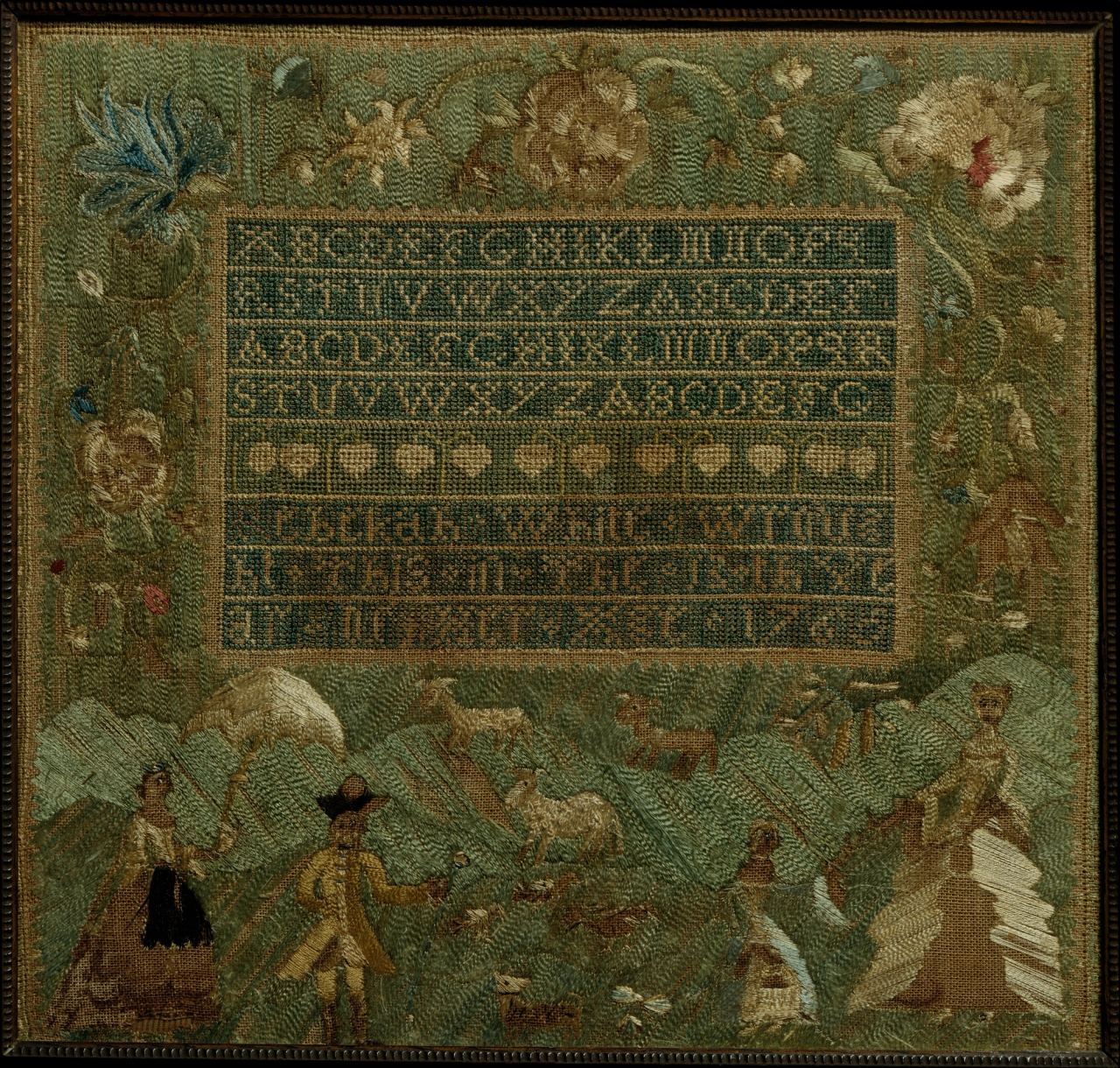
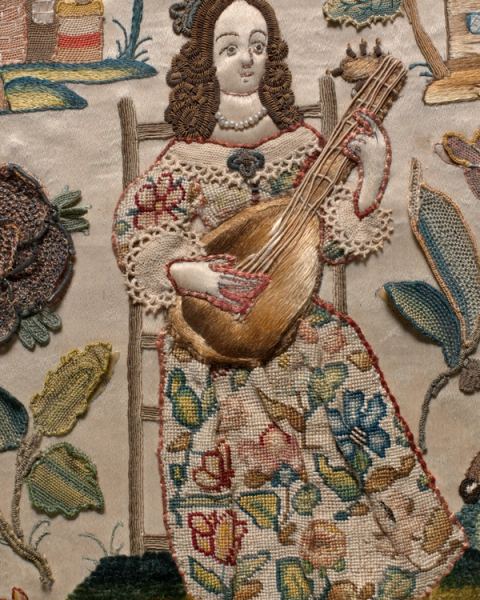
The Met's 1766 sampler by Rebekah White shows both halves of the craft. Its alphabets and row of hearts sit in a framed block, and zoomed in, the letters read as tiny crossed stitches in a regular grid. Around them, flowers and figures are drawn with longer, freer stitches. The Met's record gives silk embroidery on linen and does not list individual stitches, so this is a visual reading.
Cross-stitch is not easy so much as predictable. The skill it builds is counting without losing your place.
What is surface embroidery, and what does it need?
Surface embroidery is stitching worked on top of a drawn design, with no reference to the weave. It teaches the most because nothing is decided for you: you choose the stitches, the thread and the order. The V&A files crewelwork, goldwork, Chinese silk embroidery and raised work under freestyle, so it is the umbrella for crewelwork and stumpwork (for the raised kind, see Stumpwork: Embroidery That Stands Off the Cloth).
Choose a plain weave: the Embroiderers' Guild of America says a plain-weave linen works well with surface embroidery. The design must be transferred first. The Wikipedia summary of crewelwork, which I used to locate references, lists printed transfers, water-soluble pens, a light box and prick-and-pounce as methods.
Its drawback is that nothing tells you where a stitch goes. A small first project with three or four stitch types, such as one outline stitch, one filling stitch and French knots, gives you the vocabulary without the overwhelm. That advice is the editors' own, not a museum's.
What is crewel, and is it a style?
Crewel is a thread, not a design style. The Royal School of Needlework describes crewelwork as a style of surface embroidery using crewel wool thread, particularly popular in early 17th-century Britain under James VI and I, which is why it is also called Jacobean work. Wikipedia's summary says the name refers to the wool rather than any particular design.
The classic look is a tree of life: a central tree rising from stylized hillocks, with flowing branches, leaves, flowers, fruit and animals. The RSN says the motif was almost certainly influenced by Indian palampores, the bedcovers being imported at the time, and by the botanical illustrations that followed the discovery of new plants in the Americas. The V&A likewise says crewelwork was influenced by Indian textiles imported to England. The usual palette is greens, blues, bright yellows and browns with some red on an off-white or beige linen twill.
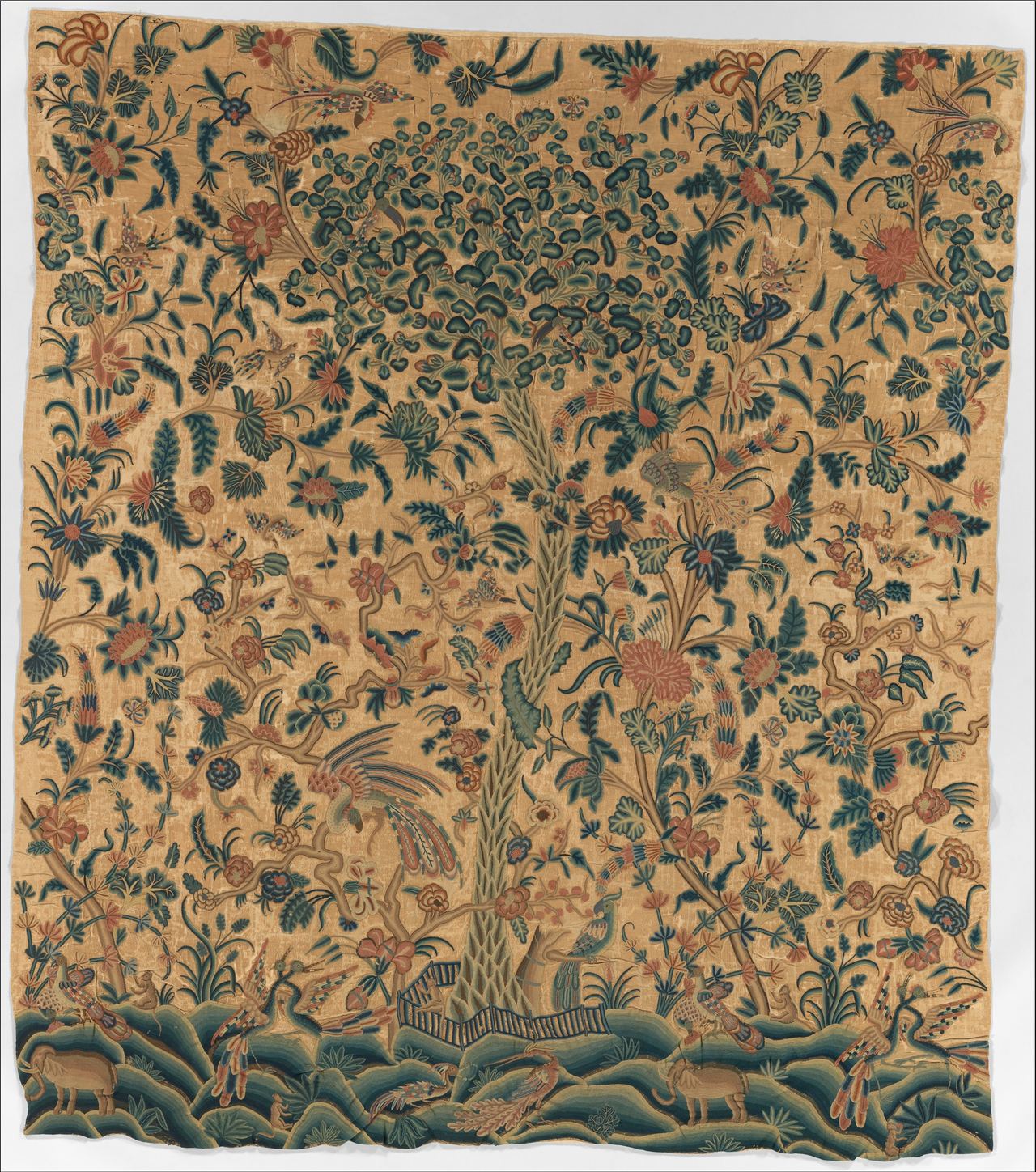
The Met's bed hanging from the late seventeenth century is wool on cotton and linen twill. At the bottom, animals stand on green hillocks, and a tree with a rounded crown, birds and large flowers fills the cloth above them. A pair of early eighteenth-century crewel bed curtains in the Met's collection (2017.726a, b) is recorded as crewel wool embroidery on a plain-weave wool ground, so crewel was not confined to one ground fabric.
For a beginner, crewel is a natural first step into surface work. According to Wikipedia's summary, crewel wool is thicker than silk or cotton thread, which gives a raised, dimensional effect, and the needle matters: Wikipedia's summary describes a wide-bodied crewel needle with a large eye and a sharp point, to carry the wool through the cloth.
What is sashiko, and how is it different?
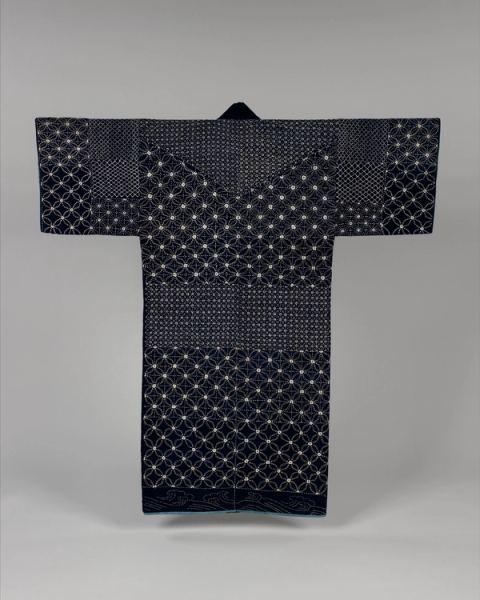
Sashiko is a Japanese stitching technique built on the running stitch, used to mend, reinforce and decorate cloth. Japan Objects describes white thread on indigo-dyed fabrics such as cotton and hemp, with a twisted thread and a needle with a larger eye. Cynthia Shaver, in a paper for the Textile Society of America, says the thread was usually doubled through the needle and gives about five to ten stitches per inch.
It does not fit the counted-or-surface split cleanly, which is its interest. Shaver writes that the ground threads were not usually counted, but the stitches were. You stitch on plain cloth and plan the pattern in advance, then count stitches along straight lines. A related tradition, kogin, is counted-thread work, as the V&A's guide classes it.
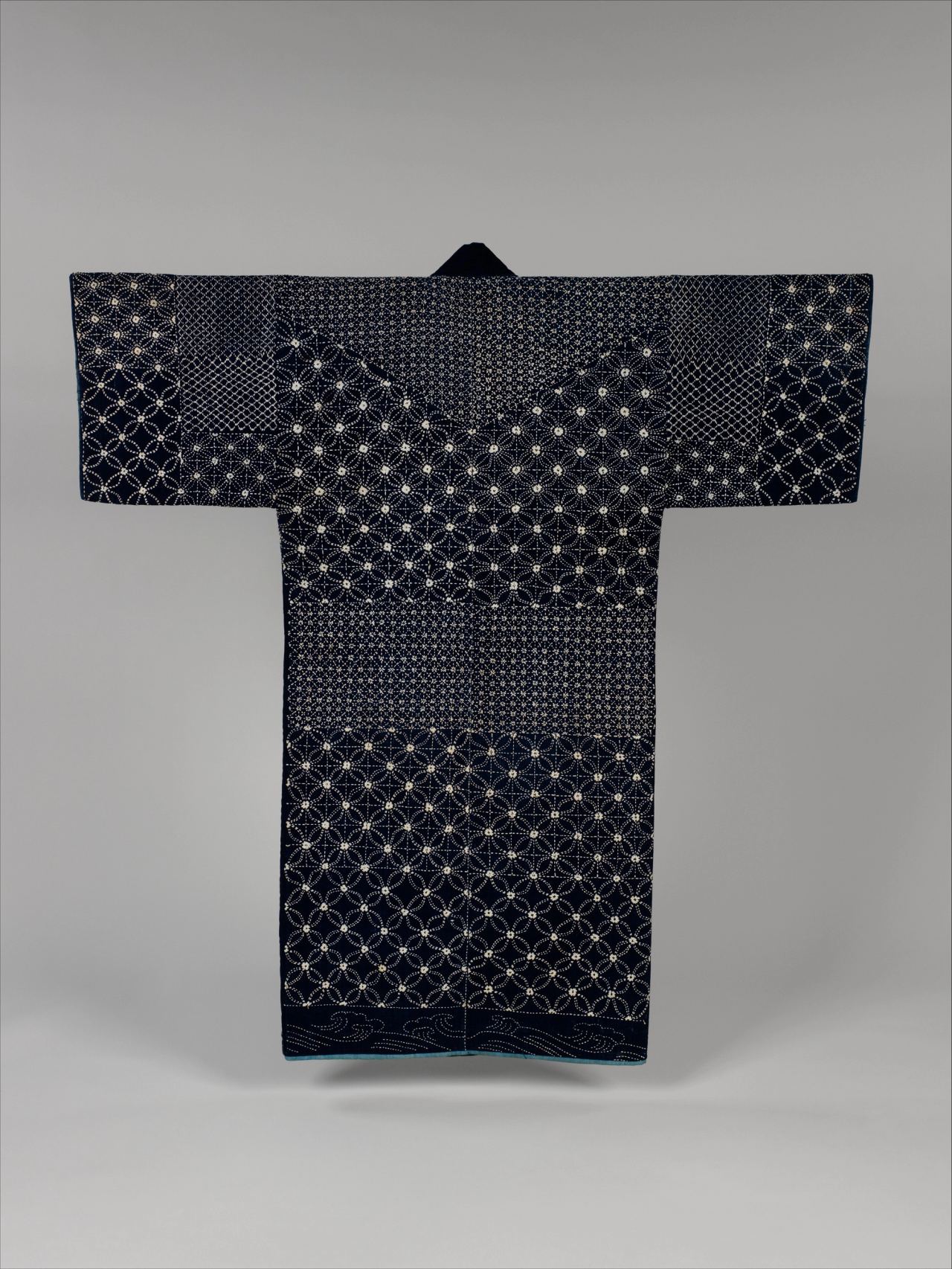
The Met's jacket is indigo-dyed plain-weave cotton, quilted and embroidered with white cotton thread. Rows of white stitching form interlocking circles and small grids across the garment. For more on how sashiko relates to mending, read Sashiko vs. Boro: One Is a Stitch, One Is a Cloth.
Sashiko's strength for a beginner is that it uses one stitch. It teaches evenness and layout more than variety, and Japan Objects notes that denim copes with thick thread while delicate vintage cloth may tear. Its weakness, in the editors' view, is that it hides nothing: uneven stitches show in a pattern of straight lines.
What about blackwork?
Blackwork is worth knowing, though it is rarely a first project. The RSN calls it monochrome embroidery, generally in black thread, worked either as counted-thread patterns on evenweave or as freeform embroidery. In the sixteenth century it decorated linen collars and cuffs, and by the end of that century also coifs and other garments. The RSN notes that the Elizabethan flora-and-curving-stems style was often freeform, that counted blackwork appeared on samplers in the second half of the seventeenth century, and that the counted version was revived in the twentieth.
The Met's panel of blackwork, dated 1580–1620, is linen worked with silk thread in buttonhole, cross, outline and herringbone stitches. That is useful evidence in itself: blackwork was not a single stitch but a method of filling shapes with patterns. If cross-stitch feels too mechanical and free embroidery too open, counted blackwork sits in between.
How do you choose, and how big should the first project be?
Match the style to the temperament, then keep the project small. Choose cross-stitch if you like charts and finishing things to a plan. Choose surface embroidery or crewel if you want to draw. Choose sashiko if you like repetition or want to mend something. Choose blackwork once you want to design your own patterns on a grid.
Whatever you pick, size the piece before buying the cloth. Fabric count is threads or squares per inch, so a design 140 stitches wide on 14-count Aida finishes at 10 inches, before you add margin for framing. The Workbench's Embroidery & Cross-Stitch Size Calculator does that arithmetic from a stitch count, an Aida or evenweave count and a margin, or works backward from a target size. It is built for counted work; for free embroidery you simply decide the size when you draw it.
Pick one project for a few evenings, not a few months. A finished small piece teaches more than an abandoned large one,.
Where can you see these styles?
The Metropolitan Museum of Art has open-access records for every object pictured here: the Jefferis picture (59.20), the White sampler (1984.331.8), the crewel bed hanging (08.186a), the Sashiko Jacket (67.172.1) and the panel of blackwork (35.21.3). The Royal School of Needlework's StitchBank describes each technique and its stitches, and the V&A's embroidery guide gives the wider map. On Teazle, Smocking: Gathering Cloth into Structure shows how embroidery stitches can hold a shape, a different use of the same needle.
Related terms: cross-stitch, crewelwork, sashiko, blackwork, needlepoint, kogin and couching.
Sources
- Embroidery styles: an illustrated guide. Victoria and Albert Museum. Full text read via WebFetch: no universal classification; counted-thread, freestyle (surface), whitework; cross-stitch, blackwork, kogin counted; crewelwork, stumpwork freestyle. Accessed October 19, 2026.
- Crewelwork (StitchBank). Royal School of Needlework. Full page read via curl: surface embroidery in crewel wool, early 17th-century Britain, tree of life, palampores, linen twill, palette. Accessed October 19, 2026.
- Cross stitch (StitchBank). Royal School of Needlework. Full definition read via curl. Accessed October 19, 2026.
- Blackwork (StitchBank). Royal School of Needlework. Full page read via curl: counted or freeform, 16th-century collars and cuffs, samplers, 20th-century revival. Accessed October 19, 2026.
- Canvaswork (StitchBank). Royal School of Needlework. Full page read via curl: counted thread, covers the ground, wool/silk/cotton. Accessed October 19, 2026.
- Fabric for Embroidery: The Beginner's Guide. Embroiderers' Guild of America. Full text read via WebFetch: Aida, evenweave, plain weave, counted vs surface, beginner advice. Accessed October 19, 2026.
- Shaver, Cynthia. Sashiko: A Stitchery of Japan (1992). Textile Society of America. Paper text read via WebFetch: white cotton on indigo, balanced weave, stitches counted but ground threads not, 5-10 stitches per inch. Accessed October 19, 2026.
- Sashiko. Japan Objects. Full article read via WebFetch: mend, reinforce, embellish; twisted thread; larger-eye needle; denim vs delicate cloth. Accessed October 19, 2026.
- Open Access records 13725, 14087, 215352, 746489, 50805, 223032, 229029 (Collection API). The Metropolitan Museum of Art. Object records read through the Met Collection API; isPublicDomain true confirmed for each; images inspected and enlarged. Met web pages return 429 from this environment. Accessed October 19, 2026.
- Spring-Summer 2026: the 7 trends redefining our desires according to Etsy. Luxus Plus. Full page read via WebFetch: beginner embroidery kits +175% attributed to Etsy's trend report; period not stated. Accessed October 19, 2026.
- Gen Z turns to knitting, crochet and embroidery to escape the algorithm. La Voce di New York. Page read via WebFetch: 2026 Michaels Creativity Trend Report, searches for embroidery, knitting and crochet +136% over six months. Accessed October 19, 2026.
- Etsy Spring/Summer 2026 trends. Stylist. Page read via WebFetch: 'soft stitch era' passage, Amy Beecham. Accessed October 19, 2026.
- Crewel embroidery; Cross-stitch; Embroidery. Wikipedia. Read in full via WebFetch; used to locate references; claims on transfer methods and crewel needle attributed to the page's summary. Accessed October 19, 2026.
Glossary
Last updated · Markdown · Report an error