Dress
Ann Lowe: Designer of Jacqueline Kennedy's Wedding Gown
Ann Lowe, a Black designer from Alabama, made the gown Jacqueline Bouvier wore in 1953, and the newspapers never named her. Her life, the burst pipe, and the dresses that survive.
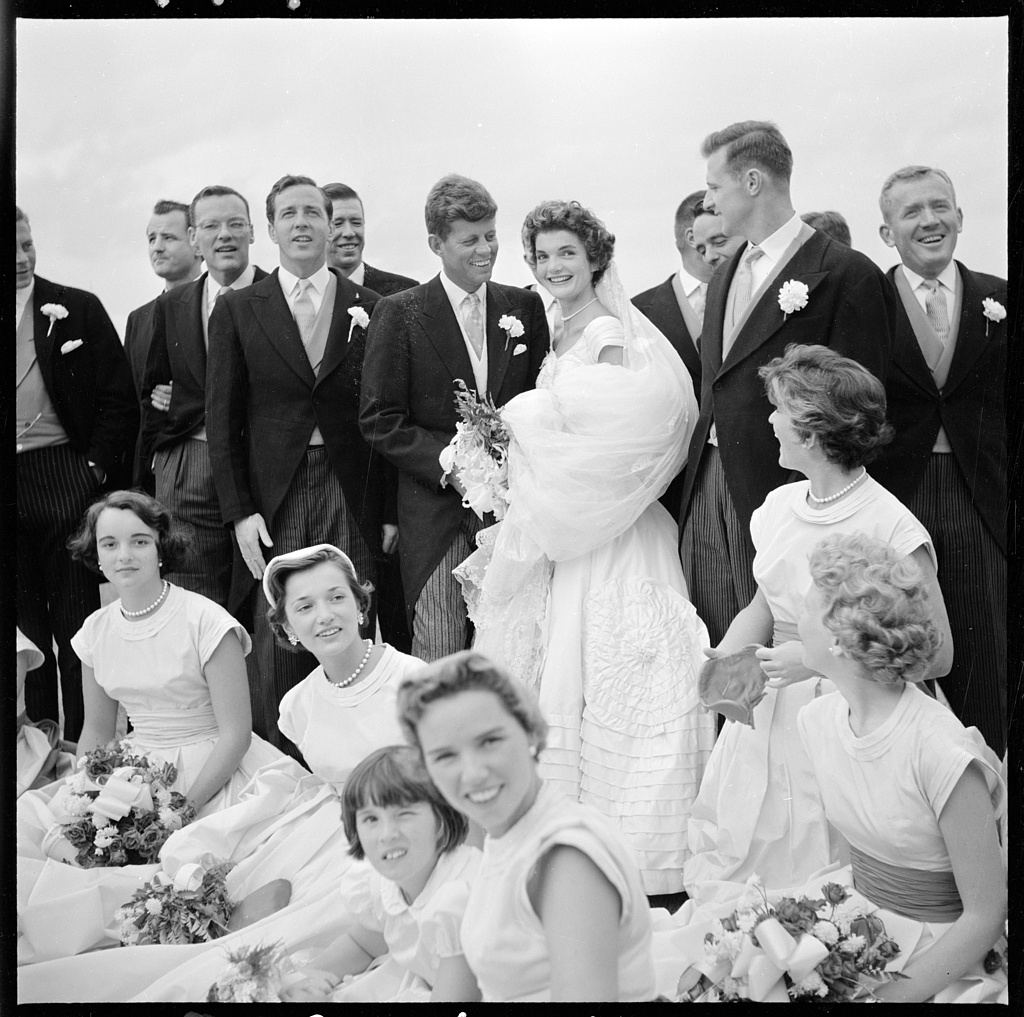
Ann Lowe, a Black dressmaker and designer from Alabama, made the ivory silk taffeta gown Jacqueline Bouvier wore when she married John F. Kennedy in Newport, Rhode Island, on September 12, 1953. Newspapers described the dress in detail but did not name its maker. Lowe was publicly credited only in the mid-1960s.
Who was Ann Lowe?
Ann Lowe was an American dressmaker and designer, born in Clayton, Alabama, in or around 1898 and died in Queens, New York, in 1981. She learned to sew from her mother and grandmother, built a clientele in Tampa, then spent her career in New York making debutante and wedding gowns for families listed in the Social Register.
Her birth year is not fixed. Most accounts give 1898, and the Smithsonian's catalog records give her dates as "1898 - 1981". BlackPast, however, says the specific date of her birth is unknown. One biographical sketch adds that census records suggest she may have married at twelve rather than fourteen, which would not fit a birth in 1898 either. This article therefore says "about 1898" and gives no day of the month, because the sources opened for it do not agree on one.
Her family was the first teacher. The Library of Congress says her mother and her grandmother, who was born into slavery, passed on their sewing skills. Elizabeth Way, a curator at the Museum at FIT, writes that the family moved to Montgomery when Lowe was very young and "established a thriving business" making gowns for the society ladies of the state capital. Names vary: her mother appears as Janey, Janie or Jane Lowe, and her grandmother as Georgia Cole, Georgia Tompkins or Georgia Thompkins.
As a child, according to the White House Historical Association, Lowe sewed scraps from her mother's work into small flowers. Flowers stayed in her designs for the rest of her career.
When did her mother die, and what happened next?
Most accounts place Janey Lowe's death in 1914, when Ann was about sixteen. At the time she was working on ball gowns for the wife of the governor of Alabama. BlackPast says four gowns for the state's first lady; the University of Delaware's magazine says a New Year's Eve gown. Ann finished the order and took over the business.
One source disagrees. The Vintage Fashion Guild's profile says her mother died in 1917 and gives no source for that date. Every other account read for this article ties the death to Lowe's sixteenth year, which points to 1914 if she was born in 1898. This article follows 1914 and flags the difference rather than choosing silently.
How did she get from Alabama to New York?
She went by way of Tampa. By 1916, according to the National Archives, Lowe had moved to Florida, where she "quickly became a premier custom dressmaker." Way's account says a wealthy Florida woman, Josephine Lee, noticed Lowe's stylish clothes in an Alabama department store and hired her as a live-in dressmaker for her four daughters. Lowe's husband objected, and she took the train with her young son, Arthur, anyway.
Tampa's social season gave her steady work. Way describes the Gasparilla festival balls, for which young women were chosen for a court. One Tampa socialite recalled: "If you didn't have a Gasparilla gown by Annie, you might as well stay home." Lowe was known there as Annie.
In 1917, with the Lee family's encouragement, she went to New York to study at the S.T. Taylor Design School. The school was segregated, and she worked in a room by herself. Way writes that she completed the course in half the usual time and went back to Tampa.
Accounts differ on when she left Florida for good. The National Archives and a library blog from the Fashion Institute of Technology give 1927; Way, FIT's Fashion History Timeline and BlackPast say 1928. In a 1966 interview she explained the move this way: "I just knew that if I could come to New York and make dresses for society people, my dreams would be fulfilled."
For two decades or so she designed for other fashion houses, through the Depression and the war. By 1950, the National Archives says, she was working steadily at her own salon on Madison Avenue, which the FIT library blog places at 540 Madison Avenue, second floor. A salon of that kind is an atelier: a workroom where each garment is made for a named client.
What had Lowe already made for the Auchincloss family?
Countless designs, in the National Archives' words, between 1947 and 1957. The post, written by the decorative arts historian Margaret Powell, notes that when Jacqueline's stepsister Nina Auchincloss appeared in Vogue on August 1, 1955, she wore an Ann Lowe debutante dress. BlackPast adds that Jacqueline's mother, Janet Auchincloss, chose Lowe for the 1953 wedding after earlier commissioning the dress she herself wore to marry Hugh D. Auchincloss in 1942.
That history explains the commission. Lowe was a known dressmaker to the family long before the wedding made her work famous, and the Library of Congress counts the Kennedys, the Roosevelts, the Rockefellers, the du Ponts, the Whitneys, the Posts, the Bouviers and the Auchinclosses among her clients.
| Date | Event | Where it comes from |
|---|---|---|
| About 1898 | Born in Clayton, Alabama; exact date not established | BlackPast; Fashion Historian; Smithsonian catalog |
| 1914 (one source says 1917) | Her mother dies; Lowe finishes ball gowns for Alabama's first lady and takes over the shop | BlackPast; Fashion Historian; Vintage Fashion Guild for 1917 |
| 1916 | Moves to Florida as a live-in dressmaker for the Lee family | National Archives; Fashion Historian |
| 1917 | Studies at the S.T. Taylor Design School in New York, segregated in a separate room | Fashion Historian; University of Delaware |
| 1927 or 1928 | Moves to Manhattan permanently | National Archives (1927); Fashion Historian (1928) |
| 1947-1957 | Designs for the Auchincloss family | National Archives |
| By 1950 | Runs her own Madison Avenue salon | National Archives; FIT library blog |
| About ten days before September 12, 1953 | A burst pipe ruins the bridal gown and attendants' dresses | Library of Congress; University of Delaware |
| September 12, 1953 | Jacqueline Bouvier marries John F. Kennedy at St. Mary's Church, Newport | Evening Star; Library of Congress |
| September 13, 1953 | The New York Times front page describes the gown without naming the designer | National Archives |
| December 1964 | The *Saturday Evening Post* profiles her as "Society's Best-Kept Secret" | Tatter (tatter.org); FIT Fashion History Timeline |
| December 1966 | *Ebony* profile, "Dean of American Designers," by Gerri Major | Tatter (tatter.org); Fashion Historian |
| 1972 | Retires | National Archives |
| February 25, 1981 | Dies in Queens | Library of Congress; White House Historical Association; BlackPast |
Who made Jacqueline Kennedy's wedding dress?
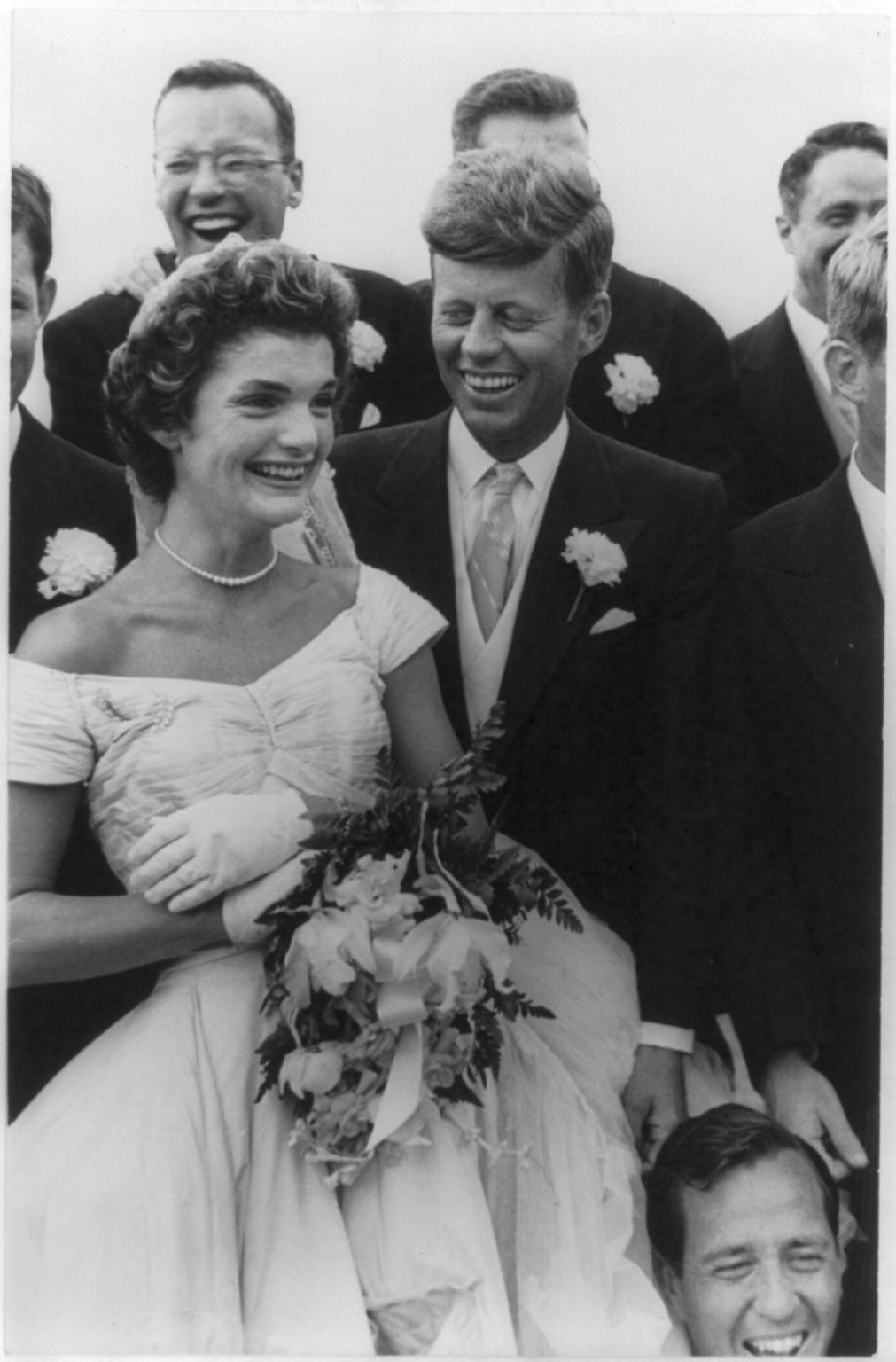
Ann Lowe made it, along with the bridesmaids' dresses. The Library of Congress catalog record for one of Toni Frissell's wedding photographs says so directly: "Jacqueline Kennedy's wedding dress was designed by Ann Lowe of New York." The gown is now in the collection of the John F. Kennedy Presidential Library and Museum in Boston, according to the National Archives.
The Evening Star of Washington described it on the day of the wedding as "an ivory silk taffeta gown with a portrait neckline, tight-fitting bodice and full skirt," and the next day added "circular designs of tucking" on the skirt. An heirloom veil of rosepoint lace, the paper noted, had been worn by the bride's grandmother. The attendants wore "long pink taffeta dresses, sashed with faille silk."
Frissell's photograph above shows the skirt's large circular design of tucked bands. The White House Historical Association adds that the bodice carried interwoven bands of tucking and the skirt tiny wax flowers.
What went wrong ten days before the wedding?
A burst pipe in Lowe's workroom ruined the gown. The Library of Congress says the bride's dress and all the bridesmaids' dresses were destroyed by water ten days before the ceremony, and that Lowe's remaking of them averted a social disaster. Accounts differ on how many attendants' dresses were lost.
The University of Delaware's magazine adds that Lowe said nothing to the family. She bought new fabric, gathered seamstresses and worked around the clock, at a loss it puts at $2,200. The same article reports that when she arrived in Newport with the dresses she was told to use the servants' entrance, and answered: "If you want the dresses, this is the door I am coming in." These details come from a university feature, not from a record made at the time, so read them as the story as it is told now.
Why wasn't she named?
The 1953 newspapers describe the fabric, the neckline and the tucking, and they leave out the designer. The National Archives post says the New York Times of September 13 ran the wedding on its front page with a description of the gown's "ivory silk taffeta, embellished with interwoven bands of tucking, finished with a portrait neckline and a bouffant skirt," and that "the only thing missing from the coverage was the name of Ann Lowe." The searchable text of the Evening Star's wedding coverage, on page 1 of September 12 and on the front page and page A-12 of September 13, names no designer either.
Later accounts say the bride, asked who made her dress, answered only that "a colored woman dressmaker" had (University of Delaware) or "a colored dressmaker" (Library of Congress). The Delaware article adds that the First Lady later denied saying it. The White House Historical Association states that Lowe was not credited for the dress until the mid-1960s.
Credit came in print. The Saturday Evening Post ran a profile in December 1964 under the title "Ann Lowe: Society's Best-Kept Secret," and Ebony followed in December 1966 with "Dean of American Designers." In a 1965 appearance on the Mike Douglas Show, Lowe said she worked "to prove that a Negro can become a major dress designer," the National Archives reports.
What did her other work look like?
It was made to measure, heavily structured, and often covered in flowers. The Smithsonian's National Museum of African American History and Culture has 25 records in its open-access catalog that name Lowe, from full gowns to miniature dresses.
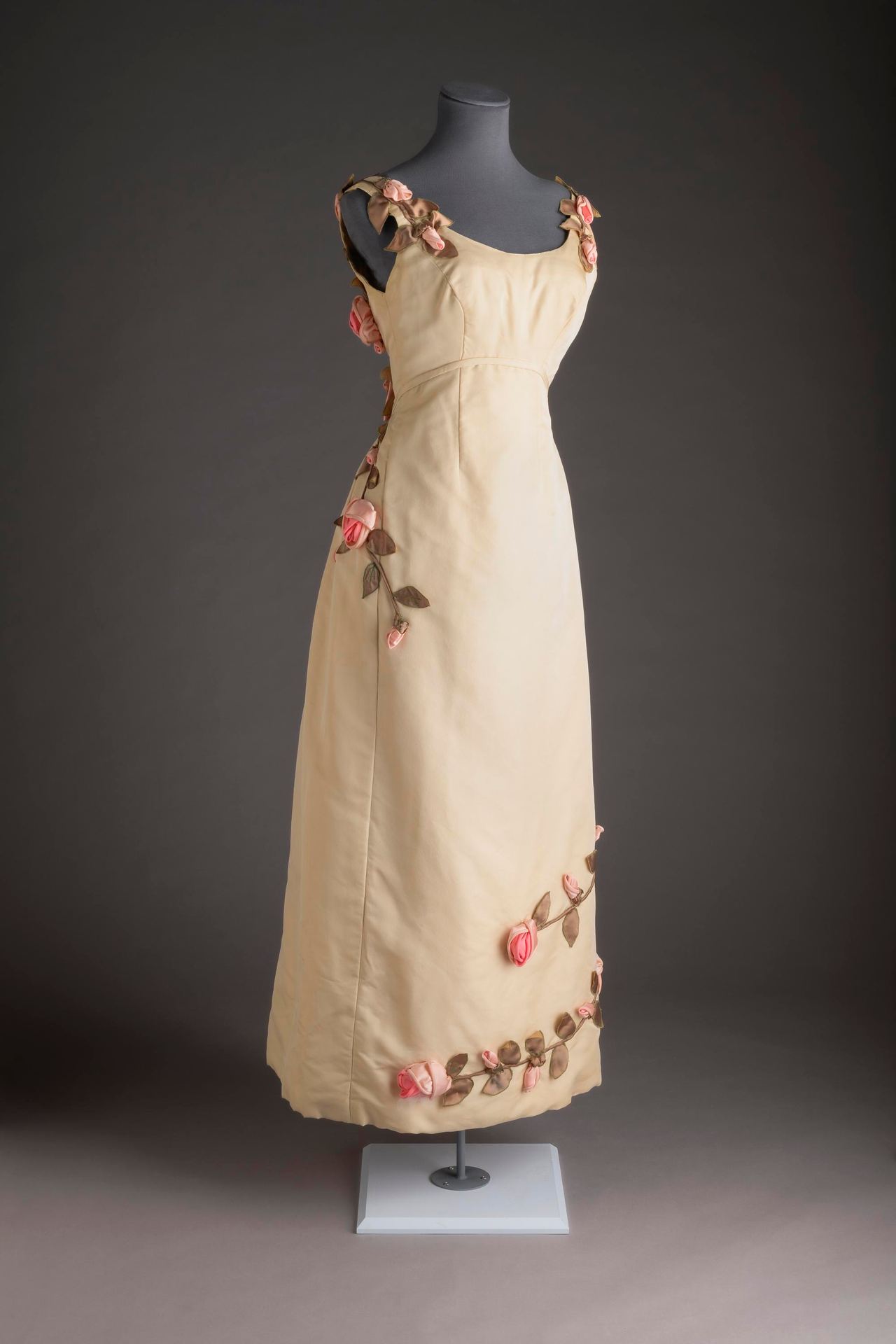
One is a 1966-1967 evening dress worn by Barbara Baldwin Dowd, called the "American Beauty" dress after the rose variety its handmade fabric vines depict. The museum's record describes a sleeveless, scoop-neck bodice cut with princess seams, with boning sewn in at regular intervals, shaped breast cups and elastic support, and an ivory faille petticoat finished with a tulle ruffle. Green silk vines carrying two-tone pink roses and buds run over the shoulders and wrap around the skirt. A second Lowe gown in the same collection, also dated 1966-1967, is made from saris.
The record says the boning is there "to provide structure and shaping." The pretty surface sits on a built frame, which is the part a photograph of the finished dress does not show.
She was clear about why she bothered. "I like for my dresses to be admired," she told the Saturday Evening Post in 1964. "I like to hear about it—the oohs and ahs as they come into the ballroom."
The White House Historical Association calls her a couturier, and the University of Delaware's magazine says she specialized in haute couture. The term haute couture is legally protected in France, so here it is shorthand for custom, hand-finished work, not a membership claim.
How did her career end?
In debt, and with failing eyesight, though she kept working. The National Archives says she closed her shop for financial reasons in 1960, became a featured designer in the Adam Room at Saks Fifth Avenue, and reopened her salon in 1964. BlackPast places the loss of her salon in 1962 for unpaid taxes and says her right eye was removed that year because of glaucoma. The Library of Congress says she declared bankruptcy in 1963 and quotes her: "Too late, I realized that dresses I sold for $300 were costing me $450."
Powell writes that she kept designing from a modest Harlem apartment until she retired in 1972. She died on February 25, 1981, in Queens.
Where can you see her work?
- The John F. Kennedy Presidential Library and Museum in Boston holds the 1953 wedding gown. The University of Delaware reports it is too fragile to display and says a replica was built for the 2023 Winterthur exhibition.
- The National Museum of African American History and Culture in Washington, D.C., holds at least two dozen objects credited to her. Its catalog record for a teal brocade dress and cropped jacket lists them as on view in the Cultural Expressions exhibition.
- The Metropolitan Museum of Art and the Museum at FIT also hold her work, according to Way's account.
- Ann Lowe: American Couturier ran at the Winterthur Museum from September 9, 2023, to January 7, 2024, according to the University of Delaware.
For another American maker whose work outlasted her recognition, read the Teazle profile of Harriet Powers. For the wider history of the dress itself, see Did Queen Victoria Invent the White Wedding Dress?.
Sources
- The Remarkable Story of Ann Lowe: From Alabama to Madison Avenue (Margaret Powell, 2013). National Archives, Pieces of History. Full text read (HTML). Source for Florida 1916, Manhattan 1927, Auchincloss commissions 1947-1957, Vogue 1 Aug 1955, NYT 13 Sep 1953 description and the unnamed designer, Saks Adam Room, 1960/1964 shop dates, retirement 1972, quotes (1966 Oakland Tribune, 1964 Saturday Evening Post, 1965 Mike Douglas Show). Accessed November 4, 2026.
- Jackie Bouvier Kennedy and John F. Kennedy, in wedding attire, with members of the wedding party (Toni Frissell). Library of Congress, Prints and Photographs Division. Catalog record read via the loc.gov JSON API: rights information 'No known restrictions on publication', call number LC-F9-02-5309-026 no. 12, date [Sept. 12 1953] (bracketed catalog date). Image inspected. Accessed November 4, 2026.
- Looking Gala at a Family Affair (Toni Frissell), record 2004665450. Library of Congress, Prints and Photographs Division. Catalog record read via the loc.gov JSON API: summary states the wedding dress 'was designed by Ann Lowe of New York'; rights 'No known restrictions on publication'; notes say the record contains unverified caption-card data. Image inspected. Accessed November 4, 2026.
- Black Dressmakers for First Ladies. Library of Congress blog. Full text read. Source for the 'colored dressmaker' report and the clients list/early life summary. Accessed November 4, 2026.
- Free to Use and Reuse: Wedding Pictures. Library of Congress blog. Full text read. Source for the burst pipe ten days before the wedding destroying the bride's and bridesmaids' dresses. Accessed November 4, 2026.
- African American Fashion Designers. Library of Congress, Inside Adams blog. Full text read. Source for the 1963 bankruptcy and the $300/$450 quotation, family clients, death date 25 Feb 1981. Accessed November 4, 2026.
- Evening Star (Washington, D.C.), September 12, 1953, p. 1 (Associated Press wedding report). Library of Congress, Chronicling America (LCCN sn83045462). OCR full text read via the loc.gov text service. Gown and attendants' dresses described; no designer named (searched for designer, designed, dressmaker, Lowe). Accessed November 4, 2026.
- Evening Star (Washington, D.C.), September 13, 1953, p. 1 and p. A-12 (wedding report continued). Library of Congress, Chronicling America (LCCN sn83045462). OCR full text of both pages read. Gown 'with a tucked fitted bodice and full skirt fashioned with circular designs of tucking', heirloom rosepoint veil worn by the bride's grandmother, attendants' dresses; no designer named. Accessed November 4, 2026.
- Dress designed by Ann Lowe, 1966-1967 (object 2007.3.19). Smithsonian National Museum of African American History and Culture. Full record read from the Smithsonian Open Access metadata (bulk S3 file; the si.edu page returns 403 to bots): description, materials, credit line, rights ('No Known Copyright Restrictions'; media CC0). 25 records name Lowe (counted in the same data). Accessed November 4, 2026.
- Teal blue dress and cropped jacket designed by Ann Lowe (object 2014.73.2.1-.2). Smithsonian National Museum of African American History and Culture. Record read from Smithsonian Open Access metadata: on-view note (Cultural Expressions, as of the data snapshot). Accessed November 4, 2026.
- Ann Lowe's Early Career (Elizabeth Way). The Fashion Historian. Full text read. Early life, Josephine Lee, Tampa, Gasparilla gowns, 1917 design school, 1928 move; cites Tampa Tribune 7 Feb 1965 and Powell's 2012 thesis. Accessed November 4, 2026.
- Ann Cole Lowe (1898-1981) (Samuel Momodu, 2017). BlackPast. Full text read. States the specific birth date is unknown; mother's death 1914; four gowns for Alabama's first lady; 1962 salon loss and glaucoma; Janet Auchincloss commission. Accessed November 4, 2026.
- Ann Lowe (December 14, 1898 - February 25, 1981). White House Historical Association. Full text read. Flowers from scraps, wax flowers on the skirt, not credited until the mid-1960s, death date. Its birth day-of-month is not used (BlackPast says unknown). Accessed November 4, 2026.
- Her name was Ann Lowe (Diane Stopyra, UD Magazine, 2023). University of Delaware. Full text read. Burst pipe, $2,200 loss, servants' entrance anecdote, 'a colored woman dressmaker' and the denial, replica, Winterthur dates. Feature article: anecdotes attributed, not stated as fact. Accessed November 4, 2026.
- 1898-1981 Ann Lowe, Fashion History Timeline. Fashion Institute of Technology. Read through the fetch tool (summary of the page): birth year only, 1917 New York course, 1928 permanent move, 1964 Saturday Evening Post and Powell/Way sources cited. Accessed November 4, 2026.
- Woman Written Back Into History (library blog, 2016). Fashion Institute of Technology library. Full text read. Florida 1916, Manhattan 1927, 540 Madison Avenue by 1950, Vogue 1955, died in Queens. Accessed November 4, 2026.
- Ann Lowe: A Couturier to Remember. Tatter. Read through the fetch tool (summary): lists Congdon, Saturday Evening Post, 12 Dec 1964 and Major, Ebony, Dec 1966. Used only for those citations and the 1914 death year, which Fashion Historian and BlackPast also give. Accessed November 4, 2026.
- Ann Lowe (Ian Drummond Collection profile). Vintage Fashion Guild. Read through the fetch tool: the sentence 'When her mother died in 1917' (no source given). The only opened source for 1917. Accessed November 4, 2026.
Glossary
Last updated · Markdown · Report an error