Dress
Elizabeth Keckley, the Dressmaker Who Bought Her Freedom
Who was Elizabeth Keckley, and what did she make? Born enslaved in Virginia, she sewed her way to freedom, ran a Washington workroom that dressed Mary Lincoln, and lost clients for writing about it.
Elizabeth Keckly (published as Keckley) was a dressmaker born enslaved in Virginia, most likely in 1818, who sewed to support the family that owned her, bought freedom for herself and her son for $1,200 in 1855, and ran a Washington workroom that dressed Mary Lincoln, Varina Davis and the wives of cabinet members. Her 1868 memoir is the fullest account we have of how her trade worked, and the book that cost her many of her clients.
Who was Elizabeth Keckley?
Elizabeth Hobbs Keckly was an American dressmaker, businesswoman and author. Born into slavery in Dinwiddie County, Virginia, she became Mary Lincoln's principal dressmaker in 1861, founded the Contraband Relief Association in 1862 and published Behind the Scenes, or, Thirty Years a Slave, and Four Years in the White House in 1868. She died in Washington in 1907.
Most writing about her concentrates on the White House. This piece keeps to her trade: her needle fed a household, paid for two people's freedom and built a business with paid assistants. Read for its working details, the memoir is a rare first-person account of a nineteenth-century dressmaking business run by a Black woman.
Keckley or Keckly: which spelling is right?
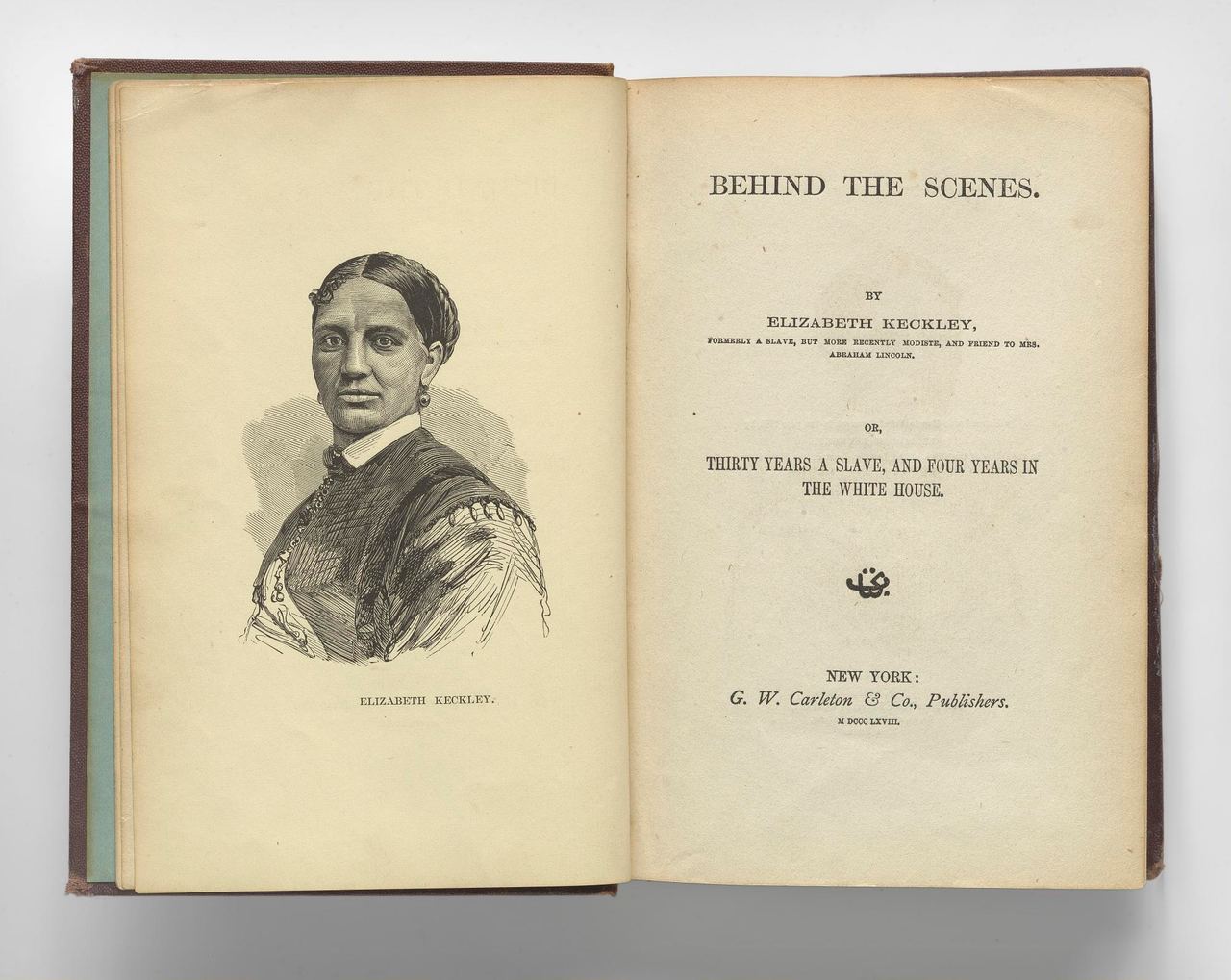
Both appear on museum labels, and both are defensible. The 1868 memoir was printed under the name "Elizabeth Keckley." The Library of Virginia says the publisher misspelled her name and that the misspelling became the most commonly used form; Oxford's English faculty notes that "Keckly" is the spelling she used for the rest of her life.
Her biographer Jennifer Fleischner, the National Park Service and the White House Historical Association write Keckly; the Smithsonian uses both, sometimes in the same record. This article uses Keckly, her own spelling, except when naming the book.
When was she born, and where was she enslaved?
The best evidence points to February 1818, but sources do not agree. The White House Historical Association cites an entry in a Burwell family commonplace book that reads "Lizzy--child of Aggy/Feby 1818." Her 1855 deed of emancipation describes her as "about 37 years of age," which fits. Gale's Encyclopedia of World Biography notes that published dates range from 1818 to 1840, and Women in World History gives "around 1824." Keckly herself wrote in 1868 only that she was "on the shady side of forty."
Her mother, Agnes Hobbs, was enslaved by Colonel Armistead Burwell and sewed for his household; Keckly learned from her. Agnes's husband, George Pleasant Hobbs, was enslaved on another farm and was taken west when Keckly was a child. Fleischner, the National Park Service and the White House Historical Association all identify Armistead Burwell as her biological father, something Keckly learned only late in her mother's life.
At about fourteen she was sent to serve Burwell's eldest son, a Presbyterian minister, and moved with his family to Hillsborough, North Carolina. There she was beaten by a local schoolmaster at her mistress's request, and was repeatedly sexually assaulted by a white man, Alexander Kirkland, by whom she had her only child, George. Sources give George's birth as 1839 (National Park Service) or late 1841 (Encyclopedia Virginia); her 1855 deed calls him "about 16." Mother and son were then sent back to Virginia, to the household of Anne Burwell Garland and her husband Hugh, who took them to St. Louis in 1847.
How did she buy her freedom?
By sewing, and with loans from her own clients. In St. Louis the Garlands were short of money, and Keckly asked to be allowed to work rather than see her mother hired out to strangers. She quickly built a reputation as a seamstress and dressmaker among "the best ladies in St. Louis," and by her own account her earnings supported the whole household.
With my needle I kept bread in the mouths of seventeen persons for two years and five months.
When she first asked to buy herself and her son, Hugh Garland refused. Later he named a price: $1,200 for the two of them. She married James Keckly, whom she had known in Virginia, believing him free; she later learned he was enslaved, and they separated. Hugh Garland died before the sale was completed, and his widow held to the agreement.
Keckly planned to travel to New York to raise the money from sympathizers. Anne Garland required six men to sign as guarantors of her return; one refused, saying she would never come back. A client, Mrs. Le Bourgois, then raised the full sum among Keckly's St. Louis patrons, and Keckly insisted on treating it as a loan. The memoir prints the paper trail in full: Anne Garland's promise of freedom "on the payment of $1200" (June 27, 1855), a receipt for $950 deposited for "Lizzy Keckley" that July and August, and the deed of emancipation of November 13, 1855, which describes her as "by trade a dress-maker." The Encyclopedia Virginia entry and the National Park Service both confirm the price and the year.
She stayed in St. Louis until 1860 and, she wrote, repaid every cent.
How did she build a business in Washington?
She arrived in spring 1860 with almost nothing. After six unsuccessful weeks in Baltimore, trying to earn money by teaching classes of young Black women "my system of cutting and fitting dresses," she found work in Washington at $2.50 a day. A free Black person needed a license to remain in the city for more than ten days, and a white person to vouch for her status; a client, Miss Ringold, arranged with the mayor for her to stay without paying for one. She rented rooms and, she wrote, "soon had a good run of custom."
For a Mrs. Lee's dress for a dinner given for the Prince of Wales, the client's husband handed her $100 to buy trimmings. At the dry-goods store of Harper & Mitchell she was allowed to take the laces away on approval, and the store paid her a $25 commission on the purchase. The dress was admired, and orders followed.
From November 1860 she worked for Varina Davis, wife of Senator Jefferson Davis. Because the household rose late and Mrs. Davis needed many fittings, Keckly split her days: mornings in her own rooms for other clients, afternoons at the Davis house. That winter she made Senator Davis a Christmas dressing-gown in "drab changeable silk," finishing the cords at midnight on Christmas Eve, and two chintz wrappers for Mrs. Davis before the family left for the South. Mrs. Davis asked her to come with them. She declined.
What did her workroom do?
It measured, cut, fitted and sewed custom dresses, and Keckly guarded the cutting and fitting herself. The memoir mentions a reception room or parlor where clients were received, a cutting room where she worked, an upstairs workroom of "work-girls," and a girl who attended the door. She measured clients, cut, returned for fittings, basted, and when needed dressed clients and arranged their hair before an event.
Her scale is reported differently. Fleischner, in Encyclopedia Virginia, writes that she eventually employed twenty seamstresses. Virginia Reynolds's study of Washington's Black dressmakers, as summarized by the Fashion Institute of Technology's Fashion History Timeline, counts twenty-five in 1865 and cites tax records showing a substantial profit. Either way, this was a business, not a woman sewing alone.
I never cut and fitted work to be made up outside of my work-room.
That sentence, written about a later client, explains her method. In June 1865 Mrs. Patterson, President Andrew Johnson's daughter, ordered a dress for her sister, who was the same size; Keckly measured Patterson and quoted three weeks. When Patterson later asked her only to cut and fit a dress that someone else would sew, Keckly refused, and the business relationship ended. Cutting and fitting decided whether a dress worked, and she would not let them leave her room. Couture houses still keep fittings inside the workroom that makes the garment; see Tailleur or Flou?
She also taught. Encyclopedia Virginia records that she trained the Black seamstresses she employed in her system of cutting and fitting, and the Library of Virginia notes that she continued to train young dressmakers after the war.
What did she make for Mary Lincoln?
Keckly met Mary Lincoln through a client, Margaret McClean, in March 1861. The memoir says three other mantua-makers were waiting at the White House that morning. Mary Lincoln asked about her prices and said she could not afford to be extravagant. Keckly measured her and took away the first commission, a dress of bright rose-colored moiré antique, then came back the next day to fit it. The levee was postponed, the client asked for a change of style, and Keckly delivered on the night itself, then arranged her hair and dressed her. In the memoir Abraham Lincoln tells his wife, "You look charming in that dress. Mrs. Keckley has met with great success."
She became Mary Lincoln's regular modiste, the word she put on her own title page, and made "fifteen or sixteen dresses" for her that spring and early summer. Her other clients named in the memoir include the wives of Senator Douglas and of Secretaries Welles and Stanton.
Very little of this output can now be identified. Dressmakers of the period rarely labeled their work, and dresses were routinely taken apart and remade, so attributions rest on family histories rather than documents; the Chicago History Museum and Elizabeth Way's research, cited by FIT, both make this point. (On why so little everyday clothing survives at all, see why so few old clothes survive.)
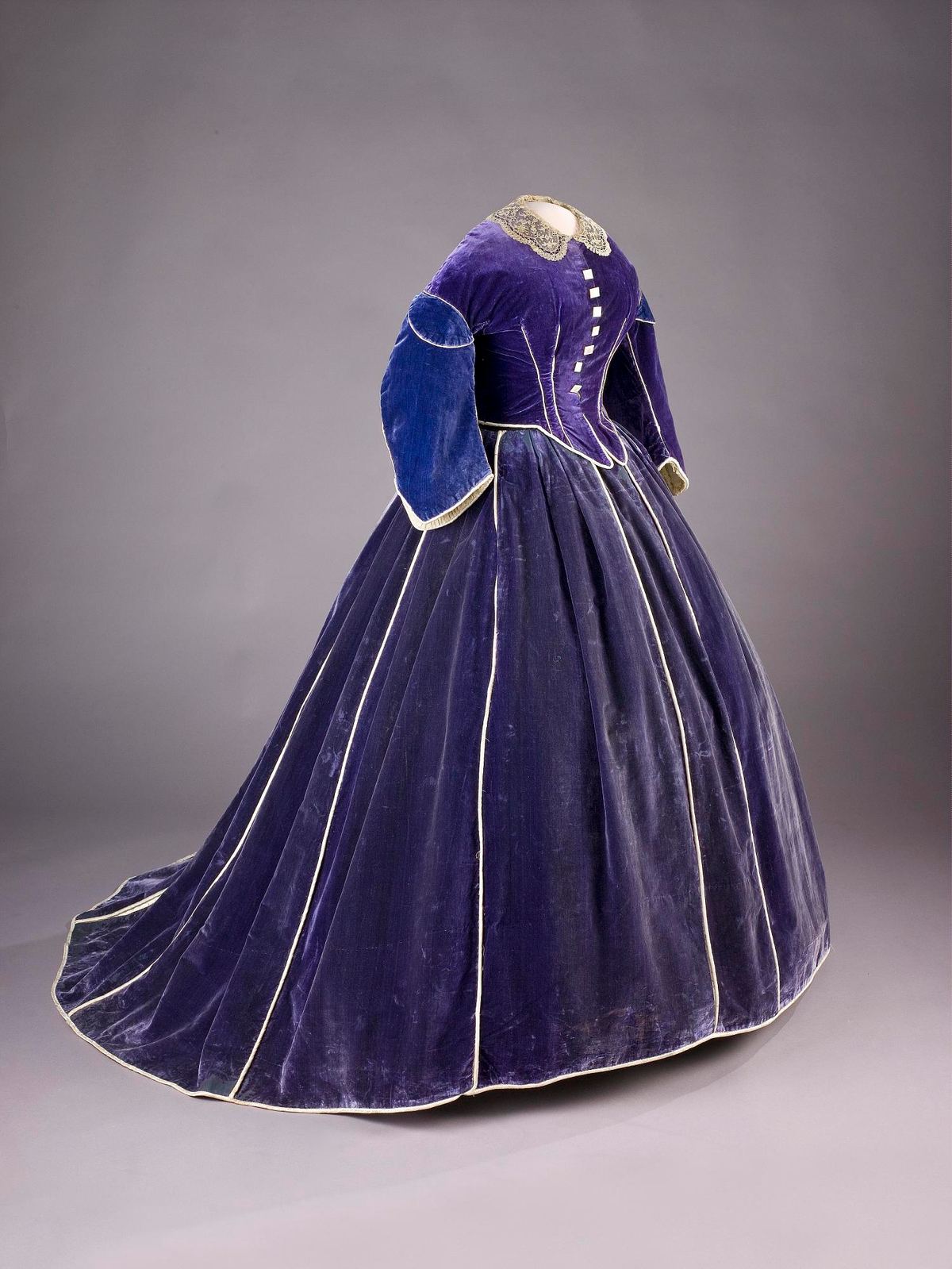
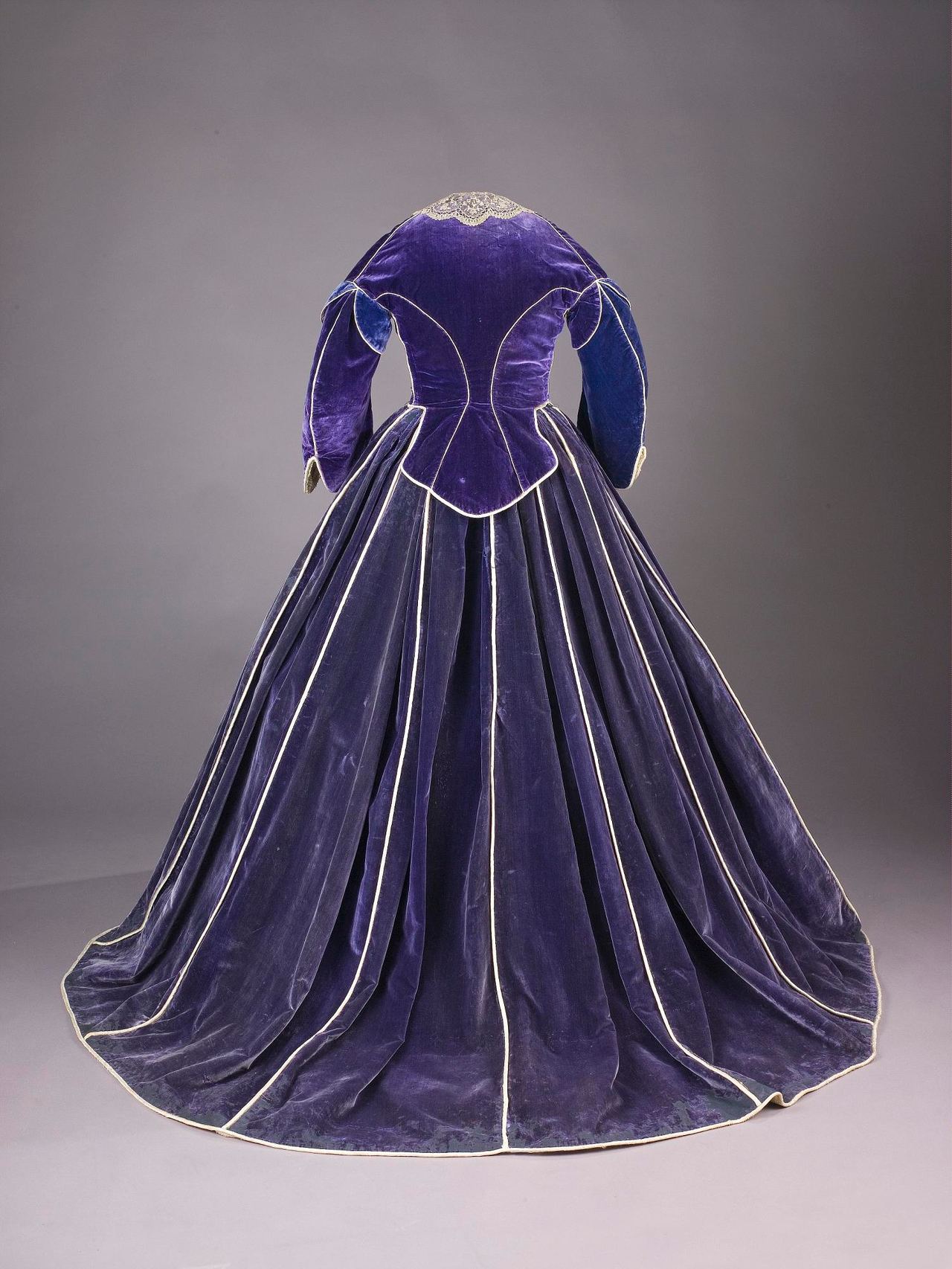
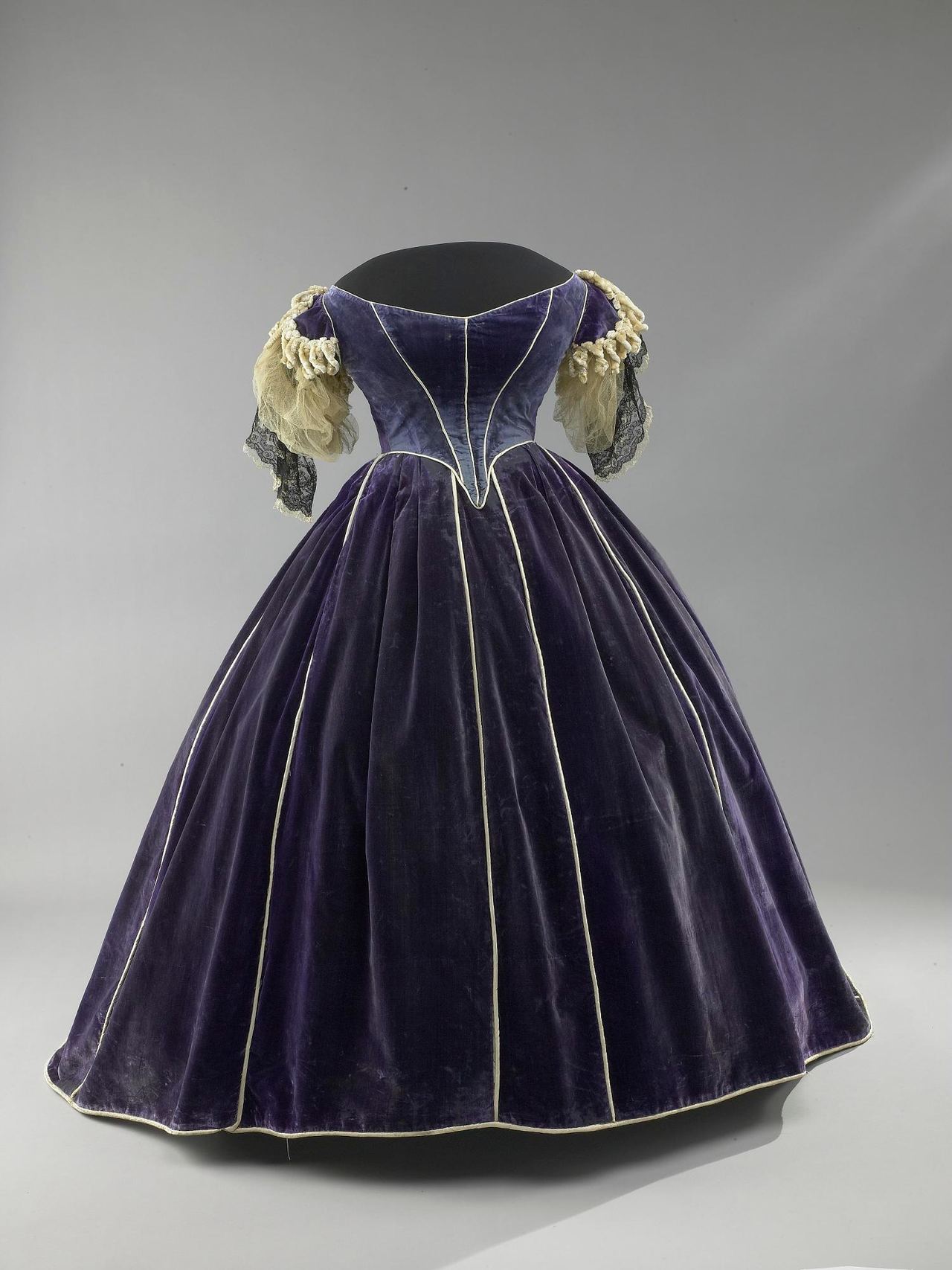
The best-known candidate is Mary Lincoln's purple velvet dress at the National Museum of American History: a skirt with a daytime bodice and a second, evening bodice, all piped in white satin, worn during the 1861–62 winter season. The museum says it is "believed to have been made" by Keckly. The family that sold it in 1916 credited a "seamstress of exceptional ability" who "made nearly all of Mrs. Lincoln's gowns," but gave her name as "Ann."
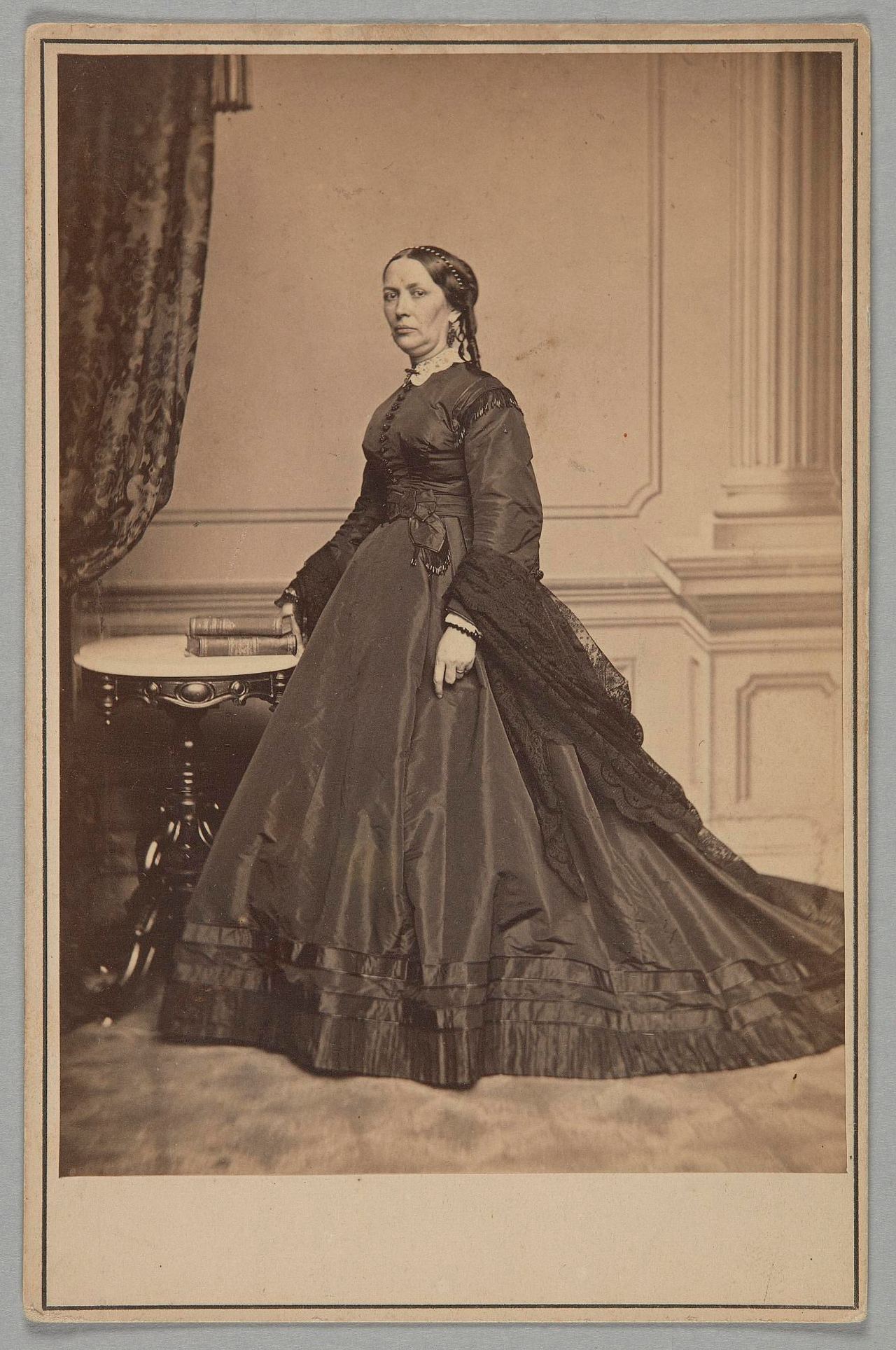
The museum also lists her as maker of a moiré silk taffeta dress worn by Nancy Ann Bean Ordway (dated 1865–69) and a white cotton christening dress she made in 1866 for her goddaughter, Alberta Elizabeth Lewis, trimmed with bobbin lace. The National Museum of African American History and Culture holds an 1866 photograph of Mary Jane Welles in a dress said to have been made by Keckly for her son's funeral in 1862.
What was the Contraband Relief Association?
It was a relief society Keckly organized in summer 1862 to help formerly enslaved people who had fled to Washington. After seeing a white charity festival for wounded soldiers, she proposed at her church that Black residents do the same for the freedpeople; within two weeks the association had forty working members. Encyclopedia Virginia identifies the church as Union Bethel and Keckly as founding president.
Traveling with Mary Lincoln that autumn, she raised money in New York and Boston. Mary Lincoln gave $200, Frederick Douglass sent donations from British antislavery societies, and the Boston branch, according to the memoir, sent more than eighty large boxes of goods during the war.
Why did her memoir cost her clients?
Because it told a white public what a dressmaker had seen. In 1867 Mary Lincoln, in debt, asked Keckly to meet her in New York to sell part of her wardrobe. The sale through commission brokers on Broadway became a public exhibition and a press humiliation, later called the Old Clothes Scandal, and Keckly was left unpaid for her time.
She wrote Behind the Scenes, published by G. W. Carleton in 1868, partly to defend Mary Lincoln and herself, and included Mary Lincoln's letters. The preface admits she may be charged with writing "too freely." Mary Lincoln took it as a betrayal and never spoke to her again, and according to the National Park Service and Encyclopedia Virginia, Robert Lincoln had the book suppressed and Keckly lost many clients.
What happened in her later years?
She kept sewing, then taught. In 1892 Wilberforce University in Ohio, where her son had studied, appointed her head of its Department of Sewing and Domestic Science; the National Park Service, the Chicago History Museum and Encyclopedia Virginia agree on the year. They disagree on when she left: the National Park Service says she resigned after a stroke the following year, Encyclopedia Virginia gives 1897.
Her son, George, had been killed at the Battle of Wilson's Creek, Missouri, in August 1861, having enlisted as a white soldier. Keckly spent her last years at the National Home for Destitute Colored Women and Children in Washington, an institution she had helped to establish during the war, and died there on May 26, 1907. Her remains now lie in National Harmony Memorial Park in Landover, Maryland. For a twentieth-century parallel, a Black designer whose work dressed the elite while her name was left off, see Ann Lowe.
Where can you see her work?
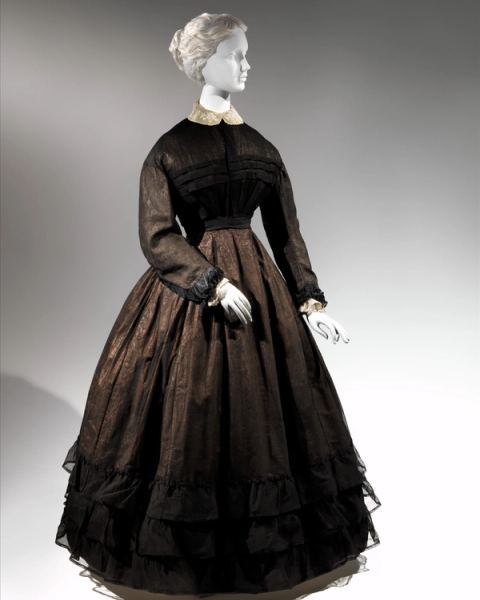
The purple velvet ensemble is in the First Ladies Collection of the National Museum of American History, which also holds the Ordway dress and the 1866 christening dress; check the museum's site for what is on view. The National Museum of African American History and Culture holds the Welles photograph, a pair of crocheted slippers attributed to her, and a modern reproduction of the purple velvet evening dress. The memoir is free to read at Documenting the American South and in the Project Gutenberg edition mirrored at the Internet Archive. For her clients' black dresses after 1861, see Victorian mourning dress.
Timeline
| Year | Event | Source |
|---|---|---|
| Feb 1818 (disputed) | Born enslaved, Dinwiddie County, Virginia; some references give c. 1824 | WHHA; Gale; Women in World History |
| c. 1832 | Sent to serve Robert Burwell's household; later taken to Hillsborough, NC | Memoir; Encyclopedia Virginia |
| 1839 or 1841 | Son George born | NPS; Encyclopedia Virginia |
| 1847 | Taken to St. Louis by the Garland family; sews to support them | Encyclopedia Virginia; NPS |
| Nov 13, 1855 | Deed of emancipation for herself and George, price $1,200 | Memoir (deed printed); WHHA |
| Spring 1860 | Moves to Washington and sets up as a dressmaker | Memoir; Encyclopedia Virginia |
| Mar 1861 | Hired by Mary Lincoln | Memoir; NPS |
| Aug 1861 | George killed at Wilson's Creek | Encyclopedia Virginia; NPS |
| 1862 | Founds the Contraband Relief Association | Memoir; Encyclopedia Virginia |
| 1867 | Helps Mary Lincoln sell her wardrobe in New York | Memoir; Encyclopedia Virginia |
| 1868 | *Behind the Scenes* published | Memoir; Library of Virginia |
| 1892 | Heads sewing department at Wilberforce University | NPS; Encyclopedia Virginia |
| May 26, 1907 | Dies in Washington, D.C. | NPS; Library of Virginia |
Sources
- Behind the Scenes, or, Thirty Years a Slave, and Four Years in the White House (Elizabeth Keckley, 1868). G. W. Carleton & Co.; Project Gutenberg eBook #24968 (Internet Archive mirror). Primary text. Full text read (Gutenberg plain text via archive.org; docsouth.unc.edu did not respond from the session). Used for: St. Louis sewing and 'seventeen persons' quote (ch. III); $1,200 price, Le Bourgois loan, printed documents of 27 Jun, Jul-Aug and 13 Nov 1855 incl. 'about 37 years of age' and 'by trade a dress-maker' (ch. III); Baltimore classes, $2.50 a day, license law, Davis half-days, dressing-gown, chintz wrappers (ch. IV); Lee dress and $25 commission, McClean, White House interview, rose moire antique, 15-16 dresses (ch. V); basting (ch. VIII); Contraband Relief Association (ch. VII, footnote B); workroom, cutting-room, work-girls, Patterson refusal (ch. XIII); Richmond holiday (ch. X); wardrobe sale (ch. XV); preface 'too freely', 'shady side of forty'. Accessed November 26, 2026.
- Elizabeth Hobbs Keckly (1818–1907) (Jennifer Fleischner). Encyclopedia Virginia, Virginia Humanities. Full entry and timeline read (HTML). Feb 1818 birth; Kirkland; George born late 1841; Garlands, St. Louis 1847; marriage 1852; 13 Nov 1855 emancipation, $1,200; Washington spring 1860; Davis from Nov 1860; twenty seamstresses; Union Bethel Church, founding president; trained Black seamstresses in her cutting and fitting system; Old Clothes Scandal 1867; Robert Lincoln halted book; Wilberforce 1892-1897; death May 1907; National Harmony Memorial Park. Accessed November 26, 2026.
- Elizabeth Keckly. National Park Service, Ford's Theatre National Historic Site. Full page read (HTML). Feb 1818; Burwell as father; George born 1839; $1,200; freedom 1855; George killed at Wilson's Creek 10 Aug 1861 after enlisting as white; Robert Lincoln halted publication, lost clients; Wilberforce 1892, resigned after a stroke the following year; died 26 May 1907 at the National Home; reburial at National Harmony Memorial Park. Accessed November 26, 2026.
- From Slavery to the White House: The Extraordinary Life of Elizabeth Keckly. White House Historical Association. Full article read (HTML). Commonplace-book entry 'Lizzy--child of Aggy/Feby 1818'; mother sewed and taught her; $1,200 agreement; emancipation 13 Nov 1855; license and voucher requirements in Washington; Contraband Relief Association summer 1862. (Its date of 1866 for the New York wardrobe trip conflicts with the memoir's 1867 letter; not used.) Accessed November 26, 2026.
- Elizabeth Hobbs Keckly. Library of Virginia, Virginia Changemakers. Full entry read (HTML). Feb 1818 – 26 May 1907; publisher misspelled her name as Keckley; trained young dressmakers after 1868; Wilberforce in the 1890s; National Home she helped establish in 1863. Accessed November 26, 2026.
- Behind the Scenes by Elizabeth Keckley (Ten-Minute Book Club). Faculty of English, University of Oxford. Full page read (HTML). 'Keckly' as the spelling she used the rest of her life; her use of 'modiste' as a pointed label of skill. Accessed November 26, 2026.
- Keckley, Elizabeth Hobbs (Encyclopedia of World Biography). Gale, via Encyclopedia.com. Opening section read (HTML). Exact birth date unknown; sources range 1818-1840; Feb 1818 most likely from Burwell records; other evidence suggests 1824 or 1825. Accessed November 26, 2026.
- Keckley, Elizabeth (c. 1824–1907) (Women in World History). Gale, via Encyclopedia.com. Opening section read (HTML). Gives birth 'around 1824' and death 26 May 1907. Used only to show the disputed birth year; its other details (e.g., husband's name) conflict with the memoir and were not used. Accessed November 26, 2026.
- 1818-1907 – Elizabeth Keckley (Eleanor Burholt). Fashion History Timeline, Fashion Institute of Technology. Full page read (HTML). Twenty-five seamstresses in 1865 and tax records showing profit (citing Virginia Reynolds, Washington History 26:2, 2014); garments rarely labeled, attribution through wearers' families (citing Elizabeth Way, Fashion Theory 19:1, 2015). Accessed November 26, 2026.
- Elizabeth Keckley: White House Dressmaker, Author, and Civil Activist. Chicago History Museum. Full post read (HTML). Death 26 May 1907; Wilberforce 1892; dressmakers rarely labeled their work and garments were remade; plaid day dress c. 1862 'believed' to be hers. Accessed November 26, 2026.
- Elizabeth Hobbs Keckley (1818-1907) (D. McNally). Social Welfare History Project, VCU Libraries. Full entry read (HTML). George born 1839; marriage 1852; $1,200; Wilberforce 1892; death May 1907. (Its claim that the purple velvet gown was worn at the second inauguration conflicts with NMAH's 1861-62 dating; not used.) Accessed November 26, 2026.
- Mary Lincoln's Dress (COLL.MTLDRS.005003; also PL.033280E bodice, PL.033280.A skirt; accession 70138). National Museum of American History, Smithsonian Institution. Records nmah_1359703, nmah_892818, nmah_515922 read in full via the Smithsonian Open Access API (si.edu pages return 403 to bots; page confirmed in the Wayback Machine). 'Believed to have been made' by Keckly; 1861-62 season; white satin piping, mother-of-pearl buttons, evening bodice, collar not original; Grimsley provenance and 'Ann' attribution; media CC0. Accessed November 26, 2026.
- Dress, 2-piece, worn by Nancy Ann Bean Ordway (CS.058351); Infant dress made by Elizabeth Keckley for her goddaughter Alberta Lewis. National Museum of American History, Smithsonian Institution. Records nmah_371431 and nmah_373430 read in full via the Smithsonian Open Access API: Keckley named as maker; moire silk taffeta, 1865-1869; christening dress of 1866, cotton with bobbin lace. No images available. Accessed November 26, 2026.
- Cabinet card of Mary Jane Hale Welles in a funeral dress by Elizabeth Keckly (2018.35.2.2); Pair of stars and stripes slippers attributed to Elizabeth Keckly (2018.35.2.1ab). National Museum of African American History and Culture, Smithsonian Institution. Records read in full via the Smithsonian Open Access API: dress 'said to have been sewn and designed' by Keckley for Hubert Welles's funeral, 1862; Henry Ulke, 1866; rights 'Public domain', media CC0. Slippers 'attributed'. Reproduction 2007.3.640ab record also read. Accessed November 26, 2026.
- Elizabeth Keckley (frontispiece to "Behind the Scenes"), NPG.2015.109. National Portrait Gallery, Smithsonian Institution. Record read via the Smithsonian Open Access API: c. 1868, unidentified artist, G. W. Carleton & Co., etching and engraving; CC0. Image inspected. Accessed November 26, 2026.
Glossary
Last updated · Markdown · Report an error