Quilts
Did Quilts Carry a Secret Code to Freedom?
No source from the period shows quilts used as a secret code. What the record does show is Black women making quilts for warmth, company, income and art, from the 1930s interviews to Gee's Bend.
No evidence has been found that quilts carried a secret code to freedom. The story comes from one family's oral history, published in a 1999 book, and historians have found nothing to corroborate it. What the record does show is quieter and better documented: Black women, enslaved and free, made quilts for warmth, for company, for money and for pride.
Where does the quilt-code story come from?
The best-known version appears in Hidden in Plain View, a 1999 book by Jacqueline Tobin and Raymond Dobard, a Howard University professor (some accounts give 1998). Its main source is Ozella McDaniel Williams, a South Carolina quilter descended from enslaved people, who told Tobin that her family had handed down a system of quilt patterns used to guide people escaping north. According to National Geographic's 2004 account of the book, a plantation seamstress first sewed a sampler quilt for memorizing the code and then ten quilts, each showing one pattern. In that telling a wrench meant gather tools and prepare to flee, a wagon wheel meant pack for a long journey, a bear's paw meant follow the mountains north, and tumbling blocks meant leave when an agent was near. NPR's 2024 summary says the book describes as many as twelve quilts, so even the count varies between retellings.
Tobin and Dobard rested the account on oral testimony. Dobard told National Geographic that oral history is the right kind of evidence, because written records would have been dangerous to keep, and that quilts were made to be used, so few would survive a century and a half. That argument is reasonable on its face. The question historians ask is whether anything else, written or spoken, points the same way.
The idea also had cousins. Barbara Brackman, a quilt historian, traces the notion of a map-quilt to Sweet Clara and the Freedom Quilt, a picture book by Deborah Hopkinson with paintings by James Ransome, published by Knopf in 1993. In the book an enslaved girl stitches a quilt that works as a map. Brackman calls it the source of the quilt-code idea and argues that a story told to children can harden into "history" when it is repeated.
What do historians say about it?
Quilt historians and historians of the Underground Railroad have found no independent support for the code. The International Quilt Museum says the story rests on oral tradition in at least one family and that no further evidence has surfaced. Their objections are specific, not dismissive.
Giles R. Wright, then director of the Afro-American History Program at the New Jersey Historical Commission, wrote a critique of Hidden in Plain View in 2000 and presented it in 2001. Quilt historian Kimberly Wulfert reposted a revised version in 2004. Wright found no documentation beyond Williams's testimony, asked who made and hung the quilts and why people would use a code that had to be memorized when a spoken direction would do, and noted that fugitives from Charleston more often traveled up the Atlantic coast than toward Cleveland. In a later interview with Wulfert he put his standard plainly: "Historians operate on the basis of documentation."
We have no historical evidence of quilts being used as signals, codes or maps.
Laurel Horton, a folklorist and quilt researcher, says the history of quilts and slavery contradicts the code story, yet she also recognizes why it is appealing: it suggests that enslaved ancestors had ways to resist. Tracy Vaughn-Manley of Northwestern University, who studies Black quilting, told NPR there are no letters or notes to support the claim.
The most public dispute came in 2007, when New York City planned a Frederick Douglass memorial in Central Park with a granite quilt tied to the code. Yale historian David Blight objected that "Frederick Douglass never saw, nor did he even hear of, a quilt used to signal a runaway slave." On NPR he said that representing Douglass through "this apocryphal tale of quilt codes is a disservice." The city's cultural affairs commissioner said the memorial's interpretive panels would be reworded to make no claim about quilt codes.
Do the escape accounts mention quilts as signals?
They mention quilts often, but as bedding, cover and aid, never as signals. William Still, the Philadelphia abolitionist who recorded the people he helped, published The Underground Rail Road in 1872. A search of the full text on Project Gutenberg finds the word quilt in only three passages. In one, a young woman named Lear Green was shipped from Baltimore to Philadelphia in a sailor's chest packed with a quilt, a pillow, food and water; she spent eighteen hours inside. In another, a fifteen-year-old girl dressed as a boy in the mid-1850s, traveling as a doctor's servant, slept wrapped in a bed quilt in a corner of a host's room. And letters from antislavery societies, such as one dated January 2, 1860, list "bed quilts" among the bedding and clothing they boxed up and sent to Still's office. In none of them is a quilt a signal; it pads, covers or is donated, which is the pattern Brackman reports for first-person escape accounts.
The other large body of testimony is the Federal Writers' Project interviews with formerly enslaved people, typewritten in 1936 to 1938 and assembled by the Library of Congress project in 1941. Their texts are on Project Gutenberg, and we searched 26 volume parts, among them Georgia, South Carolina, Alabama, Florida, Texas and Virginia. The word quilt turns up on 237 lines. Not one of those passages sits near a word like signal, code, map, secret or message. That is a search of a large sample, not of every interview, but it fits what Wright, Brackman and Blight report about the collection.
Do the pattern names hold up?
Some do not, and the dating is where the story is easiest to test. Brackman's fact sheet says the Double Wedding Ring and Sunbonnet Sue, along with most patterns cited as code, did not exist before the Civil War. In a 2011 post she adds that the Sail Boat block is about eighty years old, with no examples made in the nineteenth century. Wright, in his critique, observed that the book treats the monkey wrench as a plantation and African tool, whereas he says the tool was invented in the United States around 1850.
The picture is not entirely one-sided. NPR notes that some of the blocks named in the code did appear in quilts made in the 1850s, before emancipation. But a block that existed is not a block that carried a message. The code claim needs more than an old pattern: it needs a person from the period saying the pattern meant something.
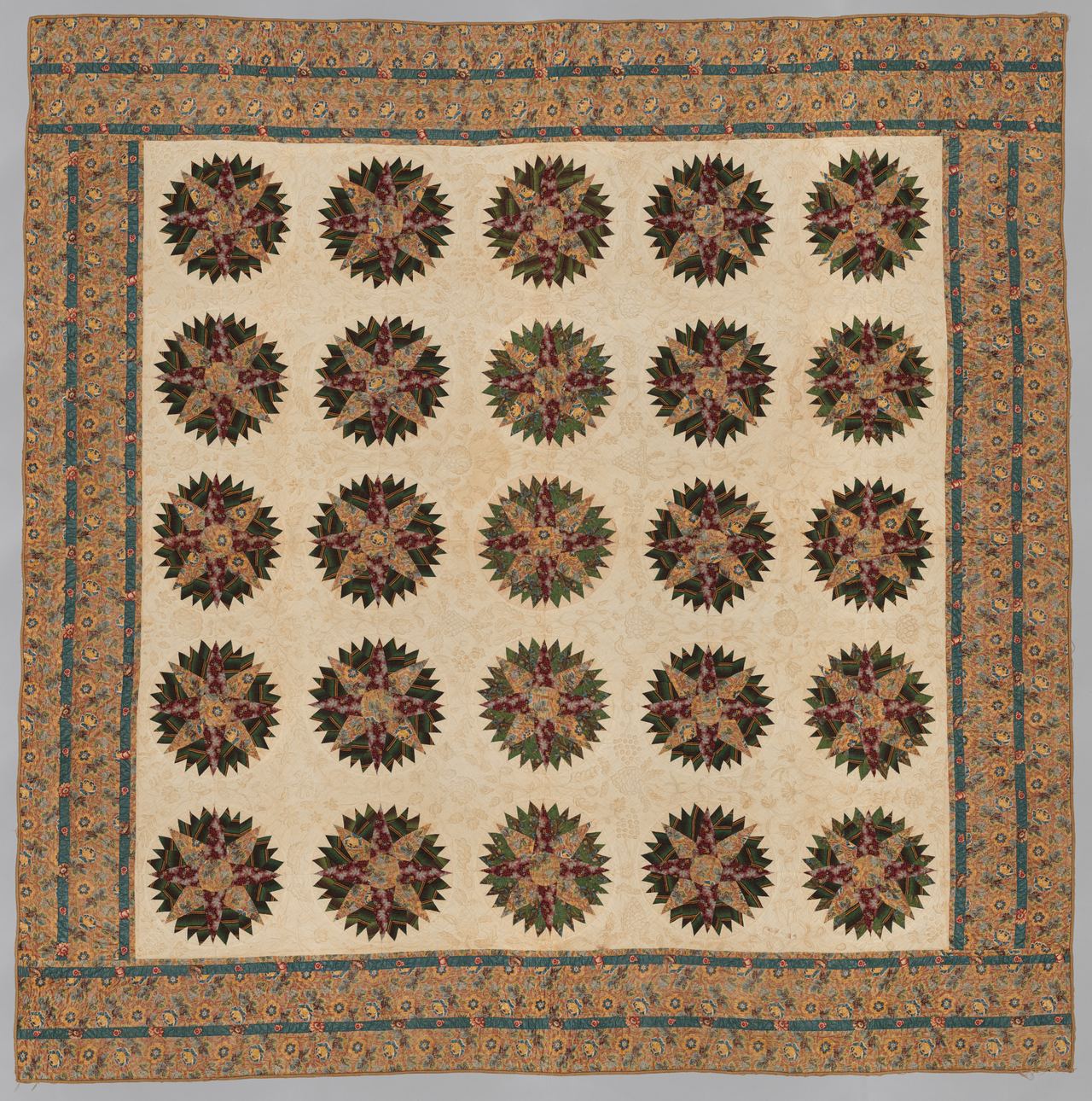
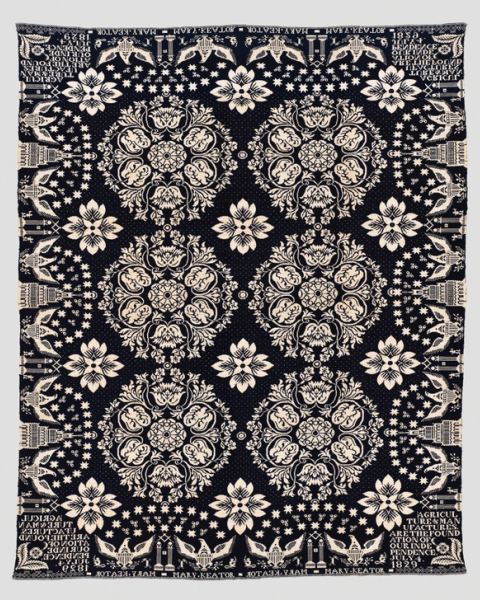
The two quilts shown here, from the Metropolitan Museum, are typical of what American women were piecing in these decades. Neither record names a maker, so they cannot support or refute any claim about the code, or about who made them. They are here to show what ordinary period patchwork looked like: printed cottons, repeated stars, borders of florals.
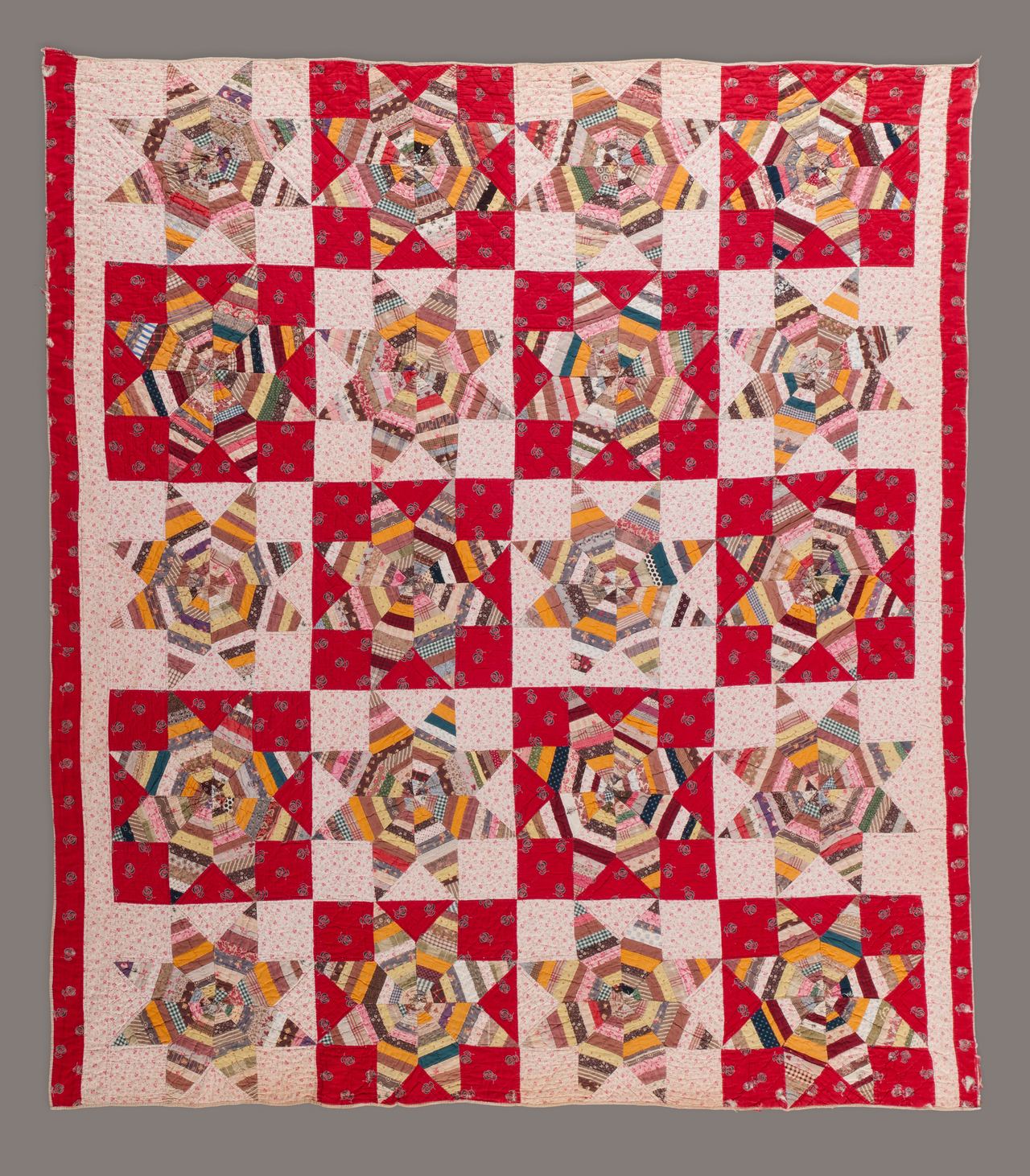
What is documented about Black quilters?
Plenty. Enslaved women made bedding, and their own accounts say so. Robert Toatley, interviewed in South Carolina, recalled of his master's place that "Bed covers was quilts and counter-panes, all made by slave women." Mom Jessie Sparrow, 83 when she was interviewed in 1937, remembered that her mother helped the mistress cut and sew plantation clothes and then make quilts from the scraps left over. In Florida, an interviewer described Margrett Nickerson, then about 89 or 90, sitting in a wheelchair piecing quilts from very small scraps, cut without any particular pattern. In Alabama, Roxy Pitts, who said she was born in 1855, showed an interviewer a quilt she was piecing, which a Miss Lucy was going to pay her three dollars for.
The interviews also record a social world around the work. One Florida interview summary says that on special holidays the enslaved gave "quilting" parties and dances, sometimes on neighboring plantations. An Alabama narrator said that in winter they quilted, going from house to house in the quarter. These gatherings resemble the quilting bee of popular memory, though the International Quilt Museum cautions that the romantic image of the bee is itself partly a later myth.
These interviews have limits. They were collected some seventy years after emancipation, mostly from people who had been children or young adults in slavery, and they come to us as an interviewer's transcription of speech. Still, they are first-hand, and they describe quiltmaking as labor, skill, comfort and community.
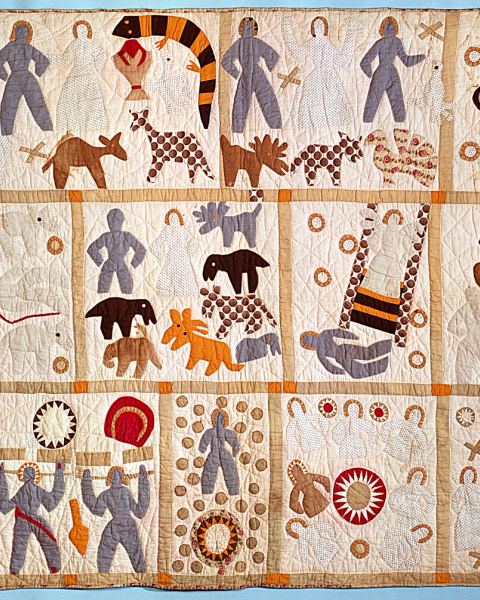
Folklorist Gladys-Marie Fry set out to document enslaved quiltmaking in Stitched from the Soul (1989; second edition, University of North Carolina Press, 2002). Her publisher calls it the first book to examine quilting in the enslaved community, with 123 photographs of quilts and other textiles attributed to enslaved women and men. One maker whose work and name survive is Harriet Powers, born into slavery in Georgia, whose two surviving appliqué story quilts are now in U.S. museums; her life and the limits of what we know about it are the subject of our profile of Harriet Powers.
What is the story of Gee's Bend and the Freedom Quilting Bee?
Gee's Bend is a Black community in Alabama, officially called Boykin, whose quilts reached art museums in 2002. According to the Souls Grown Deep Foundation's history, it takes its name from Joseph Gee, a North Carolina enslaver who acquired the land in 1816, and in 1845 the plantation passed to Mark H. Pettway, with 98 enslaved people. After emancipation, sharecropping and debt followed. In 1937 the federal government bought about 10,000 acres of the former plantation and resettled families on land they could buy, the same year the photographer Arthur Rothstein made the picture below.
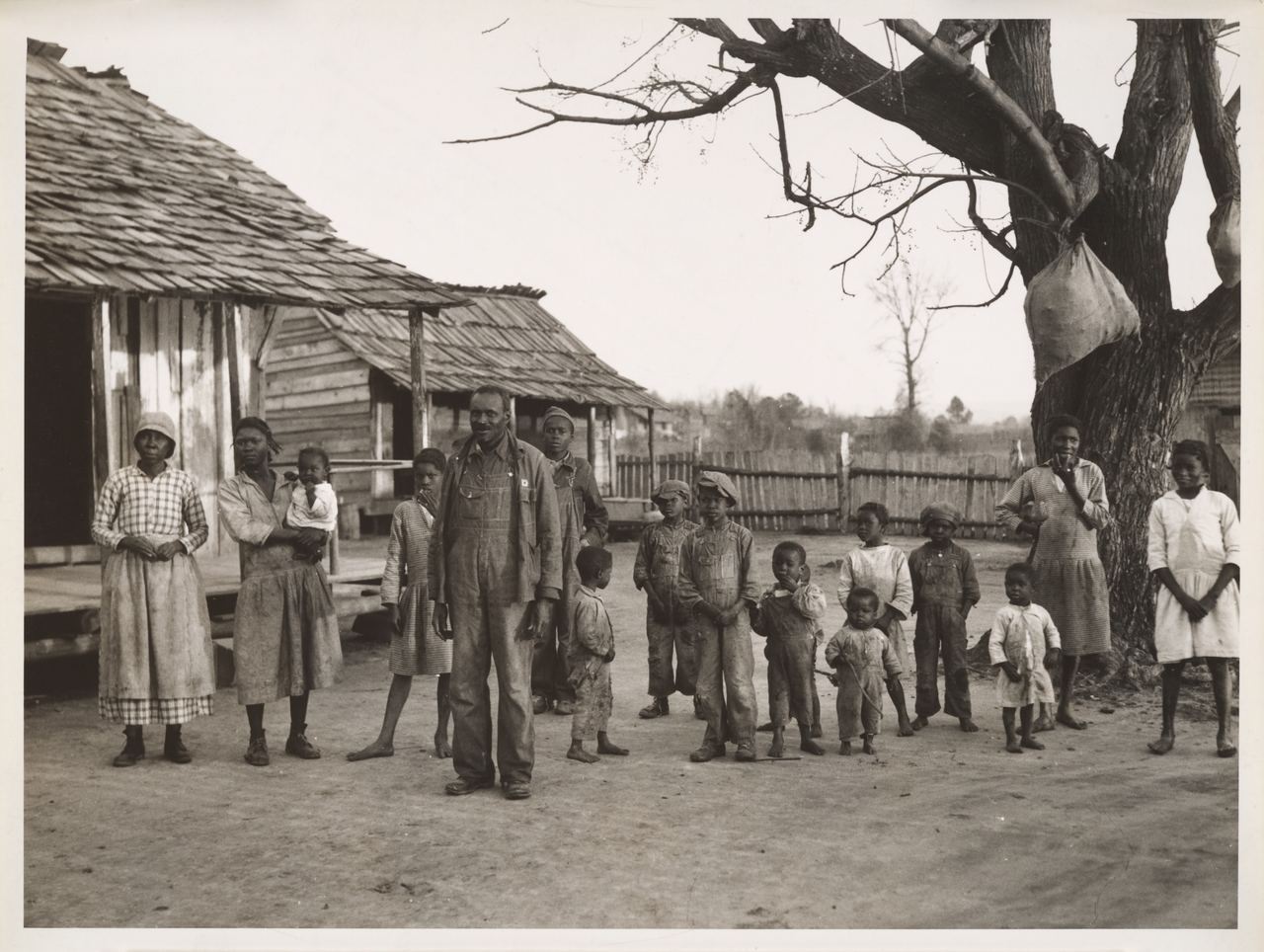
Residents are largely descendants of the people who worked that plantation, and many still carry the Pettway name; the foundation notes that enslaved people were required to take their owner's surname. Women made quilts from scraps to keep their children warm, and techniques passed from grandmothers to mothers to daughters, according to the Alison Jacques gallery's exhibition notes. The first major museum show, The Quilts of Gee's Bend, was organized by the Museum of Fine Arts, Houston, and Tinwood Alliance of Atlanta; it opened in Houston in 2002 and ran at the Whitney Museum of American Art in New York from November 21, 2002, to March 9, 2003.
Quilts also became a livelihood. The Freedom Quilting Bee was organized on March 26, 1966, in Wilcox County, Alabama, by more than sixty Black women during the civil rights movement. The Encyclopedia of Alabama says an Episcopal priest, Francis X. Walter, who had seen local quilts, proposed an auction to raise money for civil rights work, and auctions held in New York that year pushed prices from roughly $10 to $15 up to $100 or more. Vogue editor Diana Vreeland promoted the quilts. "For the first time, they earned money," the encyclopedia writes, which let some women afford indoor bathrooms, reliable roofs and college tuition. From 1972 a Sears contract for corduroy pillow covers sustained the cooperative for nearly twenty years, according to Souls Grown Deep. The Bee closed in 2012.
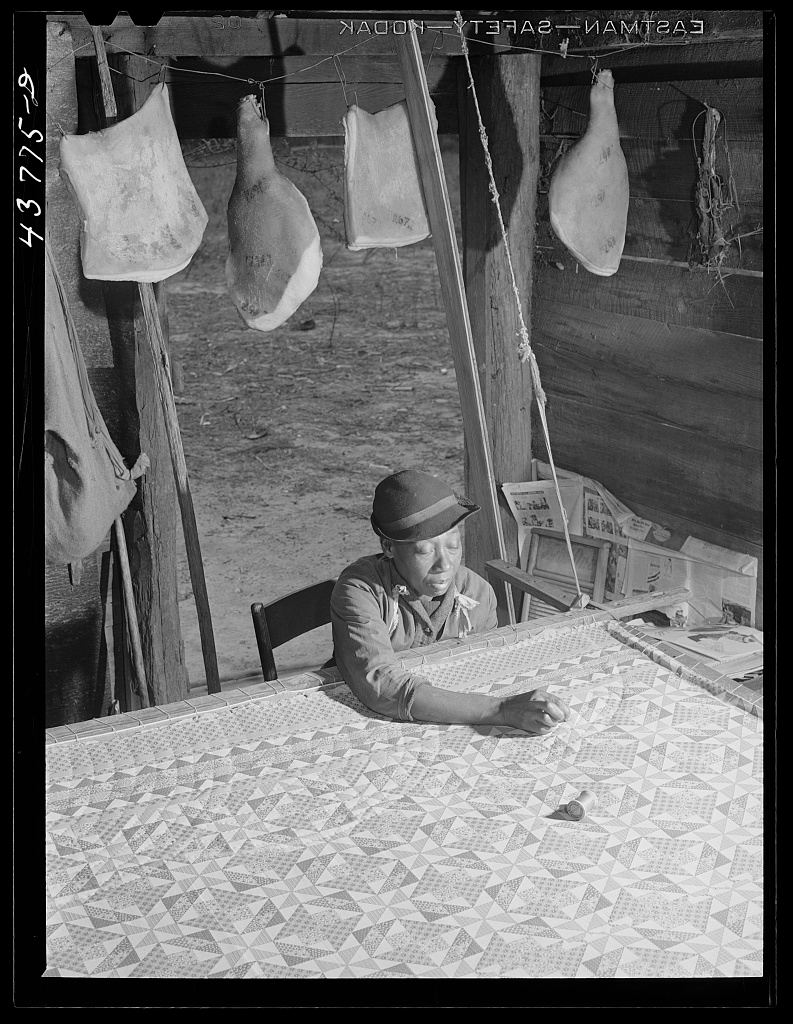
The photograph at the top is from the same era. Jack Delano photographed a woman quilting in her smokehouse near Hinesville, Georgia, in April 1941; the caption card says she had not yet found a place to move out of the Hinesville Army camp area. It is an unglamorous, careful picture of a quiltmaker at work.
Why does the story still matter to people?
Because it answers a real wish. In NPR's 2024 report, Sandra Daniel, a Black quilter in Augusta, Georgia, who is a fan of Hidden in Plain View, said it helps her connect with her history: "You can't tell me my history because it was taken from me." Melanie Dantzler of the African American Quilt Circle of Durham described a quilt by a member that drew on the code blocks, saying the maker "just put her own colors and her own spin on the blocks." Horton's reading, that the story gives ancestors a means of resistance, helps explain why it is repeated even by people who know the evidence is thin.
The costs are also real. Brackman argues that teaching the myth distracts from the true and less appealing history of slavery, and Blight called linking Douglass to the story a disservice. Treating a family tradition as unproven is not an accusation against the family that kept it. It is a statement about what historians can show.
The documented history is large enough to need its own books. Sharbreon Plummer's Stories in the Seams: A People's History of Black Quilts and Their Makers, published by Chronicle Books on October 6, 2026, is a 208-page hardcover survey of Black quiltmaking in America from the 1700s to today, with archival photographs of quilters and quilting bees, and profiles of artists including Bisa Butler, Faith Ringgold and the Quilters of Gee's Bend, according to the publisher.
How can you test a claim like this one?
Ask where it first appears, how many independent sources there are, and whether the physical evidence fits the date. The quilt code fails the first two tests today, and the pattern dates cast doubt on the third. The same questions work on any tidy story about cloth.
| Date | What the record shows | Source type |
|---|---|---|
| 1872 | Quilts appear in Still's *Underground Rail Road* as bedding, cover and donated goods | Published memoir and letters |
| 1930s | Formerly enslaved people describe quiltmaking, quilting parties and selling quilts | Federal Writers' Project interviews |
| 1937 | Federal government buys the former Pettway plantation at Gee's Bend | Souls Grown Deep history |
| April 1941 | Delano photographs a woman quilting in Georgia | Library of Congress photograph |
| 1966 | Freedom Quilting Bee organized in Alabama | Encyclopedia of Alabama |
| 1989 | Fry publishes *Stitched from the Soul* | Book |
| 1993 | *Sweet Clara and the Freedom Quilt* published | Picture book |
| 1999 | *Hidden in Plain View* published | Book based on one family's oral history |
| 2000–2001 | Wright critiques the book | Historian's essay and lecture |
| 2002–2003 | *The Quilts of Gee's Bend* at Houston and the Whitney | Museum exhibition |
| 2007 | Douglass memorial dispute | NPR, Yale Daily News |
A useful habit is to separate three layers: what a source says happened, what it says people believed, and what it says people today find meaningful. The quilt-code story is strongest in the third layer and weakest in the first.
Where can you see or read more?
The Metropolitan Museum of Art holds Gee's Bend quilts from a 2014 gift of the Souls Grown Deep Foundation, including Loretta Pettway's Lazy Gal Bars quilt (about 1965) and Housetop quilt (1963). Our images of American quilts come from the Met's open-access collection, which does not cover the Gee's Bend works. The Whitney's page for The Quilts of Gee's Bend records the 2002 exhibition.
For the code debate, read Wright's critique of Hidden in Plain View, Brackman's fact sheet and the International Quilt Museum's Underground Railroad Quilts?. Still's book and the Federal Writers' Project volumes are free on Project Gutenberg. To tell a quilt from a coverlet or a counterpane, see the difference, and if you own an old quilt, our guide to storing a vintage quilt covers the basics.
Sources
- The Underground Railroad: A Record of Facts, Authentic Narratives, Letters, &c.. William Still (1872), via Project Gutenberg. Primary. Full text downloaded and searched for 'quilt': three passages (Ann Maria Weems journey, Lear Green chest, Ellington NY box of bedding, Jan 2 1860), all read in context. Accessed October 30, 2026.
- Slave Narratives: A Folk History of Slavery in the United States from Interviews with Former Slaves (26 volume parts searched). Federal Writers' Project / Library of Congress (via Project Gutenberg). Primary. Full texts searched for 'quilt' (237 lines) and for signal/code/map terms nearby (none). Passages quoted: Toatley, Sparrow (SC Part 4, ebook 28170), Pitts (Alabama, ebook 36020), Nickerson (Florida, ebook 12297). Accessed October 30, 2026.
- Woman ... working on a quilt in her smokehouse. Near Hinesville, Georgia (Jack Delano, April 1941), LC-USF34-043775-D. Library of Congress, Prints & Photographs Division. Primary. loc.gov is bot-gated from our network; record and rights statement ('No Known Copyright') read from the Digital Library of Georgia copy of the LoC metadata (dlg.usg.edu/record/loc_fsa-bw_2017794138); image from tile.loc.gov. Accessed October 30, 2026.
- Quilt, pieced, ca. 1850, 2022.146.7; Quilt, Spiderweb pattern, ca. 1870, 1998.87.3; Arthur Rothstein, [African American Family at Gee's Bend, Alabama], 1937, 2001.298. The Metropolitan Museum of Art. Primary. Object records read via the Met Open Access API; all three isPublicDomain true; no maker recorded for the quilts. Accessed October 30, 2026.
- Hidden in Plain View: The Secret Story of Quilts and the Underground Railroad (critique). Giles R. Wright, New Jersey Historical Commission (written 2000; reposted by K. Wulfert 2004). Scholarly. Full page read. Accessed October 30, 2026.
- Quilts and the Underground Railroad Revisited: Interview with Historian Giles R. Wright. Antique Quilt Dating (K. Wulfert). Scholarly. Full page read; undated (circa 2004). Accessed October 30, 2026.
- Fact Sheet on the Quilt Code. Barbara Brackman (2006), reprinted on Antique Quilt Dating. Scholarly. Full page read. Accessed October 30, 2026.
- The quilt code persists. Barbara Brackman, Quilts & Fabric: Past & Present (2011). Scholarly blog. Full page read: Sweet Clara (1993) as source, Sail Boat and Double Wedding Ring dates. Accessed October 30, 2026.
- Underground Railroad Quilts? (American Story). International Quilt Museum, University of Nebraska-Lincoln. Museum. Full page read. Accessed October 30, 2026.
- The Quilting Bee? (American Story). International Quilt Museum. Museum. Full page read. Accessed October 30, 2026.
- Did Quilts Hold Codes to the Underground Railroad?. National Geographic (Sarah Ives, Feb 5, 2004). Full article read: code patterns as described by Tobin/Dobard, Dobard's response, Wright. Accessed October 30, 2026.
- The enduring story for Underground Railroad quilts. NPR (Sea Stachura, Mar 3, 2024), WAMC copy. Full article read: Horton, Vaughn-Manley, Daniel, Dantzler; 'as many as 12 quilts'; some blocks in 1850s quilts. Accessed October 30, 2026.
- Douglass Memorial Sparks Debate on Art vs. History. NPR (Mar 5, 2007), WFAE copy. Full article read: Blight, Levin. Accessed October 30, 2026.
- David Blight: Prof. debunks Douglass myth. History News Network, reprinting Yale Daily News (Feb 1, 2007). Full page read: Blight's e-mail statement. Accessed October 30, 2026.
- History of Gee's Bend. Souls Grown Deep Foundation. Full page read: 1816, 1845, 1937, 1966, 1972. Accessed October 30, 2026.
- Freedom Quilting Bee. Encyclopedia of Alabama. Full article read. Notes: it places the 1966 organizing in Rehoboth, Souls Grown Deep says Antioch Baptist Church in Camden; the text gives only March 26, 1966 and Wilcox County. Accessed October 30, 2026.
- The Quilts of Gee's Bend. Whitney Museum of American Art. Full page read: dates and organizers. Accessed October 30, 2026.
- The Gee's Bend Quiltmakers. Alison Jacques Gallery. Dealer exhibition page, read in full; used only for the practical-warmth and grandmother-to-daughter statements, attributed in the text. Accessed October 30, 2026.
- Stories in the Seams: A People's History of Black Quilts and Their Makers (Sharbreon Plummer). Chronicle Books. Publisher page read: publication date 10/06/2026, hardcover, 208 pages, ISBN 9781797231570, description. Accessed October 30, 2026.
- Sweet Clara and the Freedom Quilt (Deborah Hopkinson; Knopf). Publishers Weekly. Page read: publisher and plot. Publication year 1993 from library catalog listings found by search; the Brackman post also gives 1993. Accessed October 30, 2026.
- Quilts of the Underground Railroad; Gladys-Marie Fry. Wikipedia (used to locate references). Used to locate references only; the Fry description of Stitched from the Soul (publisher blurb, 123 photographs) comes from the Wikipedia article on Fry and the UNC Press edition record on Open Library. Accessed October 30, 2026.
Glossary
Last updated · Markdown · Report an error